21/08/24
Press Release
FRANCIS NWAPA
AFRICA HAS COME OF AGE TO DEPLOY NATURAL AND SCIENTIFIC RESOURCES IN THE CONTROL OF MOSQUITO
AFRICA POLITICAL OFFICE HOLDERS MUST TAKE RESPONSIBILITY FOR THE AVOIDABLE LOST OF LIVES TO MOSQUITO BORNE DISEASES ANNUALLY.
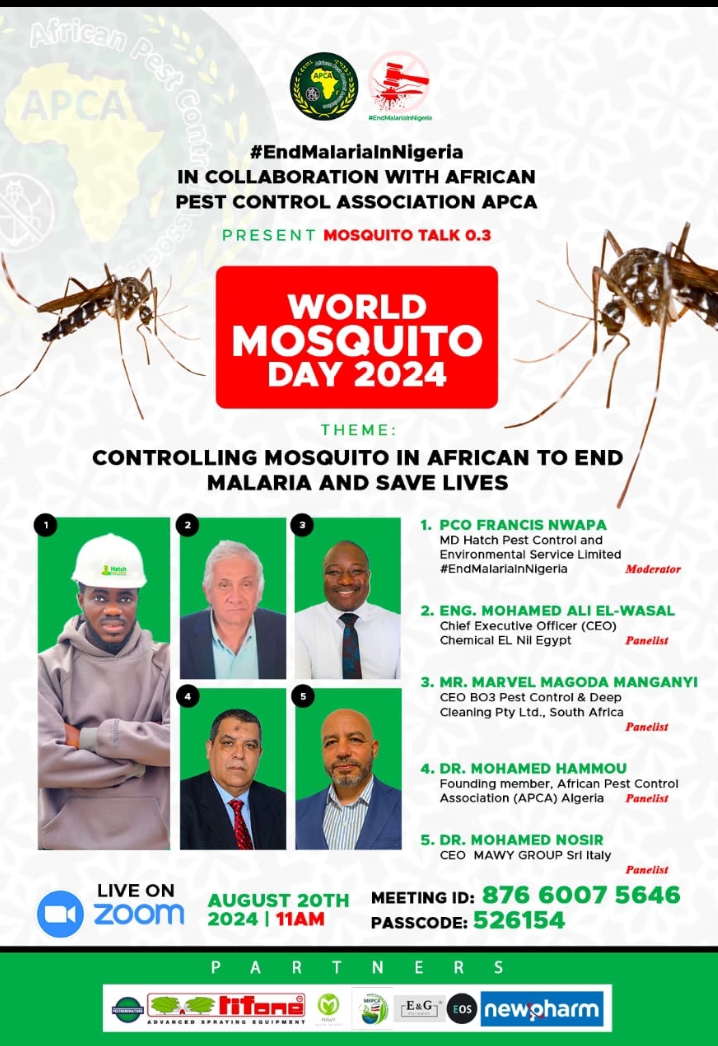
On this year commemoration of world Mosquito Day 2024, #EndMalariaInNigeria is partnering African Pest Control Association APCA to take a reflection on the avoidable loss of African lives caused by Mosquito and why African leaders must take responsibility.
Malaria which is transmitted by the bite of a female Anopheles mosquito remain a significant public health and development challenge in Nigeria and Africa. The Africa Region bore the heaviest malaria burden, with 94% of cases and 95% of deaths globally, representing 233 Million malaria cases and 580, 000 of deaths
Zika virus, West Nile virus, Chikungunya Dengue Virus, Yellow Fever, Lymphatic filariasis are Mosquito borne diseases that is ravaging Africa and causing significant death annually.
The Aedes mosquito, which transmit Dengue, has continue to move into new areas of Asia, as well as South and Central America. It is also expanding within Africa, and the warmer regions of some high-income countries, including Australia, the United States, and parts of Southern Europe
3 stages of Mosquito metamorphosis takes place on water which means that the control of water alongside Environmental modification, deployment of technology and adequate funding of public health care in Nigeria and Africa can significantly mitigate mosquito population.
Azadirachta Indica, commonly known as the Neem plant and (porpulalrly called Dogo-yaro in Nigeria) has long been recognized as a medicinal plant in Asia and Africa, with historical usage in treating malaria parasites. The Neem plant contains various bioactive compounds making it a popular ingredient in traditional remedies.
In the recent study, neem oil formulation showed promising larvicidal activity against important vectors of malaria, filaria, dengue, dengue haemorrhagic fever, yellow fever and chikungunya.
Africa has a higher chances of controlling Mosquito borne diseases if the resources of Africa can be judiciously used in preventive approaches rather than cure.
Francis Nwapa
Convener: #EndMalariaInNigeria and Youth President African Pest Control Association
 Dara Network TV