01/11/25
The Role of Immunity in Disease Management
By Livy-Elcon Emereonye
Abstract
Immunity represents the biological foundation of disease prevention, control, and recovery. The human immune system protects the body from pathogenic organisms and abnormal cell growth through a highly coordinated defense network. This paper discusses the types and functions of immunity, its significance in disease prevention, its role in acute and chronic disease management, and its application in both conventional and integrative medicine. It concludes by emphasizing the importance of immune modulation in maintaining health and longevity.
- Introduction
The immune system plays a central role in human survival by providing defense against infectious agents, toxins, and abnormal cells. Immunity can be viewed as the biological mechanism that enables the body to distinguish between self and non-self components and to neutralize potentially harmful entities (Murphy & Weaver, 2016). In the management of diseases, the strength, balance, and regulation of immunity determine both susceptibility and recovery outcomes.
- Concept and Classification of Immunity
Immunity refers to the body’s ability to resist or eliminate potentially harmful foreign materials or abnormal cells (Parham, 2015). It is broadly classified into innate (natural) and adaptive (acquired) immunity.
Innate immunity constitutes the first line of defense and is present from birth. It includes physical barriers like the skin, mucous membranes, and chemical factors such as gastric acid and antimicrobial peptides (Chaplin, 2010).
Adaptive immunity, on the other hand, develops through exposure to antigens. It involves specialized cells such as lymphocytes that generate specific responses and immunological memory, enabling faster reactions upon re-exposure to pathogens (Janeway et al., 2005).
- Immunity as a Mechanism for Disease Prevention
A well-functioning immune system prevents disease by recognizing and neutralizing pathogens before they can cause harm. It also eliminates precancerous and abnormal cells through immune surveillance (Vesely et al., 2011). Vaccination represents a practical application of adaptive immunity, as it stimulates the production of memory cells that provide long-term protection without inducing disease (Plotkin, 2014).
Thus, immunity is not only defensive but also preventive—forming the biological foundation of public health interventions.
- Immunity and Disease Progression
During disease, the immune response determines the severity and outcome of infection. A robust immune response can efficiently clear pathogens, whereas a weak immune system may lead to prolonged or recurrent infections (Abbas, Lichtman, & Pillai, 2021). Conversely, excessive or dysregulated immune responses may cause tissue damage or autoimmune diseases in which the body attacks its own cells (Davidson & Diamond, 2001).
Effective disease management, therefore, requires maintaining immune balance—strong enough to resist infection but regulated enough to prevent autoimmunity.
- Immunity in Integrative and Conventional Medicine
In conventional medicine, immunity is supported through vaccines, immunostimulants, immunosuppressive drugs, and monoclonal antibodies used to treat immune-related disorders (Delves & Roitt, 2000).
In integrative and complementary medicine, the focus is on enhancing the body’s natural resistance through nutrition, herbal remedies, lifestyle modifications, and mind-body balance (Mills & Bone, 2013). Nutrients such as vitamins C, D, and zinc are known to modulate immune function (Wintergerst et al., 2007). Similarly, herbs like Echinacea purpurea, Astragalus membranaceus, and Curcuma longa have been documented to enhance immune resilience and reduce inflammation (Block & Mead, 2003; Panossian & Wikman, 2009).
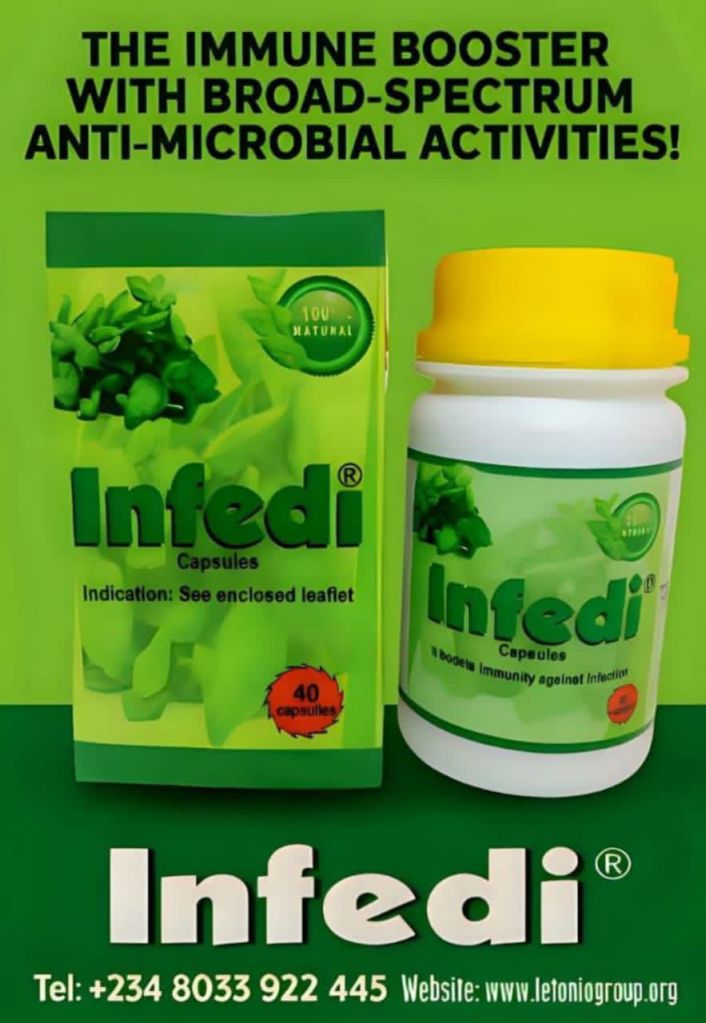
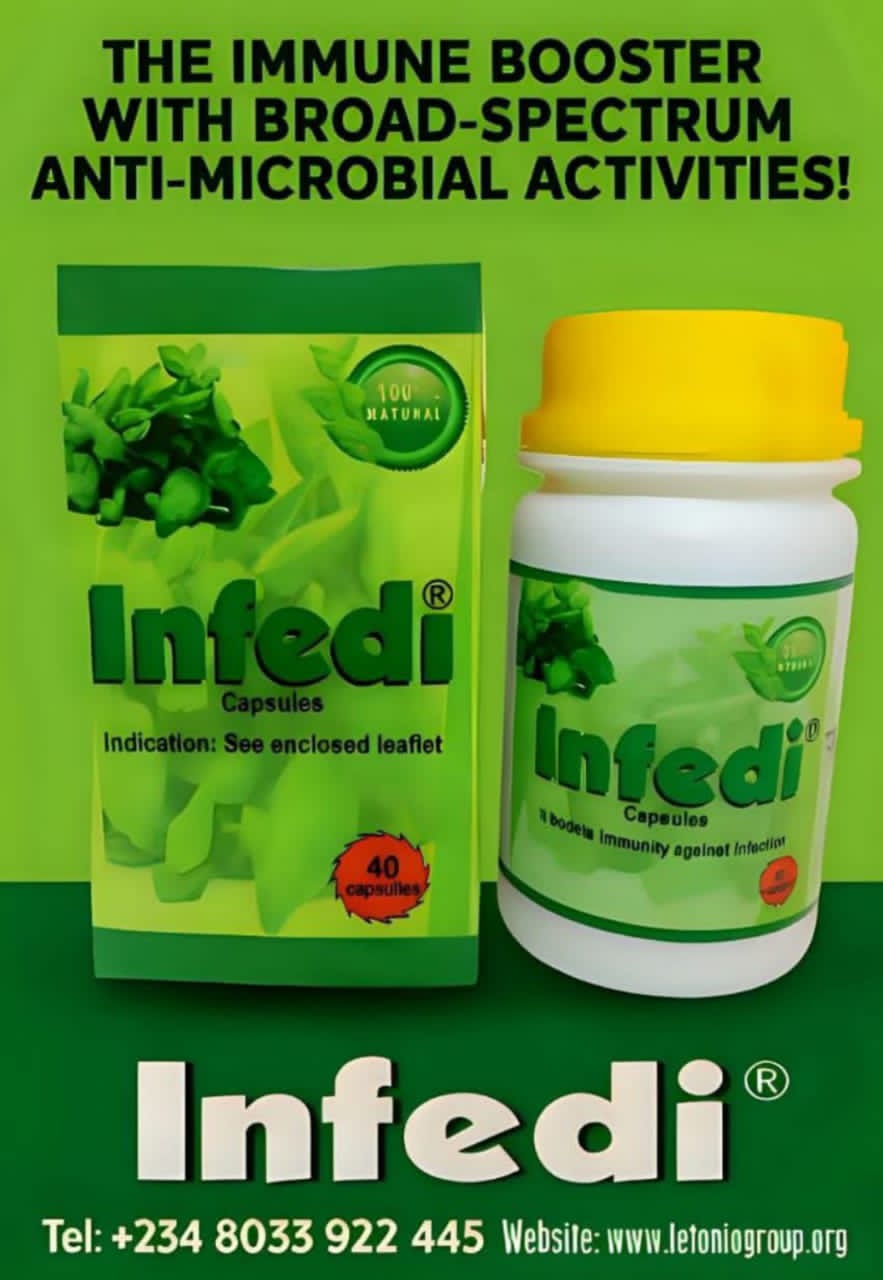
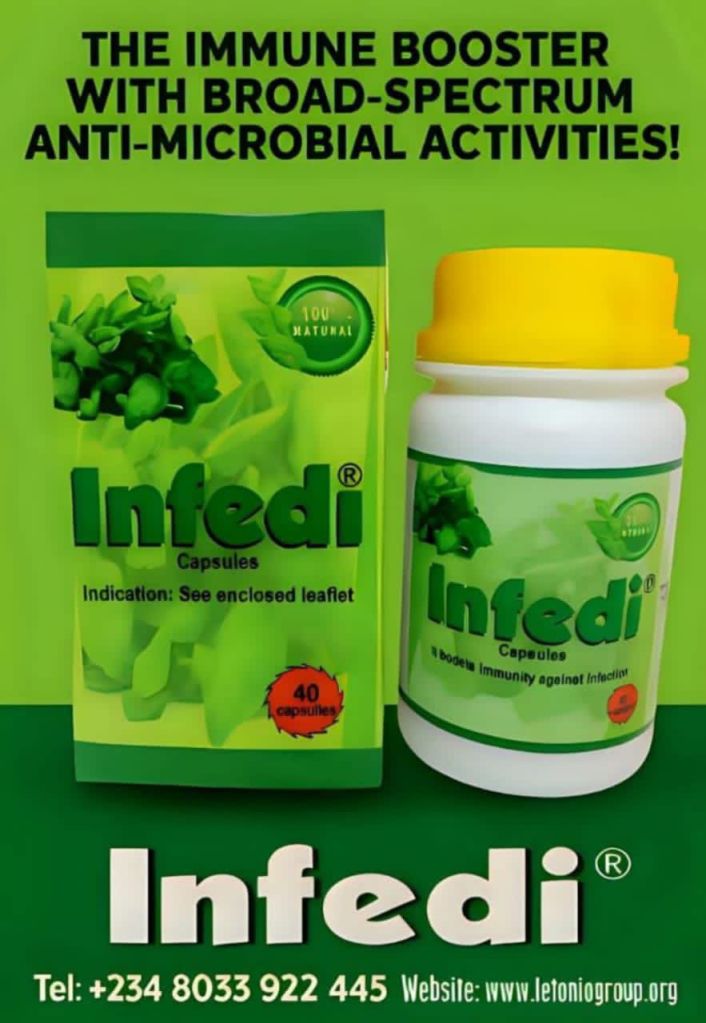
Among contemporary herbal innovations, Infedi® capsules stand out as a 100% natural supplement formulated to strengthen immune response, support detoxification, and promote overall wellness. Its herbal composition aligns with the principles of integrative medicine that emphasize safety, balance, and the restoration of physiological harmony.
- Immunity in Chronic Disease Management
Chronic diseases such as diabetes, cancer, and hypertension are often associated with immune dysregulation and chronic inflammation. Strengthening immune function can reduce systemic inflammation and improve therapeutic outcomes (Calder et al., 2013).
In oncology, immunotherapy has become a major therapeutic strategy that harnesses the body’s immune system to target and destroy cancer cells (Pardoll, 2012). Similarly, managing chronic metabolic diseases now includes approaches aimed at restoring immune balance through diet, exercise, and stress reduction (Hotamisligil, 2017).
- Immune Modulation as a Therapeutic Approach
Immune modulation refers to maintaining optimal immune responsiveness—neither overstimulated nor suppressed (Kumar & Abbas, 2020). Probiotics, antioxidants, and adaptogenic herbs such as Withania somnifera (Ashwagandha) and Panax ginseng can support this balance by enhancing resilience against stress and infection (Corthésy, 2013; Panossian & Wikman, 2009).
Given that about 70% of immune cells reside in the gastrointestinal tract, gut health and microbiome balance are critical in immune regulation (Belkaid & Hand, 2014).
- Public Health Implications of Immunity
At the population level, immunity underpins key public health measures such as immunization campaigns and herd immunity. Effective vaccination programs have significantly reduced the global burden of infectious diseases, including smallpox, polio, and measles (Fine, Eames, & Heymann, 2011). Public health education focusing on nutrition, hygiene, and environmental health further strengthens community immunity and resilience against emerging infections.
- Conclusion
Immunity represents the cornerstone of disease prevention and management. Its effective functioning determines the body’s capacity to resist, control, and recover from disease. Integrating immune support strategies—through vaccination, balanced nutrition, herbal supplementation, and healthy lifestyles—offers a holistic framework for promoting wellness. Natural products such as Infedi Capsules provide safe, herbal-based immune enhancement in line with integrative health principles. Strengthening immunity is, therefore, both a medical and moral imperative for achieving global health and longevity.
References
Abbas, A. K., Lichtman, A. H., & Pillai, S. (2021). Cellular and molecular immunology (10th ed.). Elsevier.
Belkaid, Y., & Hand, T. W. (2014). Role of the microbiota in immunity and inflammation. Cell, 157(1), 121–141. https://doi.org/10.1016/j.cell.2014.03.011
Block, K. I., & Mead, M. N. (2003). Immune system effects of Echinacea, ginseng, and Astragalus: A review. Integrative Cancer Therapies, 2(3), 247–267. https://doi.org/10.1177/1534735403256419
Calder, P. C., Ahluwalia, N., Brouns, F., Buetler, T., Clement, K., Cunningham, K., … & Kafatos, A. (2013). Dietary factors and immune function. Nutrition Reviews, 71(10), 584–599. https://doi.org/10.1111/nure.12048
Chaplin, D. D. (2010). Overview of the immune response. Journal of Allergy and Clinical Immunology, 125(2 Suppl 2), S3–S23. https://doi.org/10.1016/j.jaci.2009.12.980
Corthésy, B. (2013). Multi-faceted functions of secretory IgA at mucosal surfaces. Frontiers in Immunology, 4, 185. https://doi.org/10.3389/fimmu.2013.00185
Davidson, A., & Diamond, B. (2001). Autoimmune diseases. New England Journal of Medicine, 345(5), 340–350. https://doi.org/10.1056/NEJM200108023450506
Delves, P. J., & Roitt, I. M. (2000). The immune system: First of two parts. New England Journal of Medicine, 343(1), 37–49. https://doi.org/10.1056/NEJM200007063430107
Fine, P., Eames, K., & Heymann, D. L. (2011). “Herd immunity”: A rough guide. Clinical Infectious Diseases, 52(7), 911–916. https://doi.org/10.1093/cid/cir007
Hotamisligil, G. S. (2017). Inflammation, metaflammation and immunometabolic disorders. Nature, 542(7640), 177–185. https://doi.org/10.1038/nature21363
Janeway, C. A., Travers, P., Walport, M., & Shlomchik, M. J. (2005). Immunobiology: The immune system in health and disease (6th ed.). Garland Science.
Kumar, V., & Abbas, A. K. (2020). Robbins and Cotran pathologic basis of disease (10th ed.). Elsevier.
Mills, S. Y., & Bone, K. (2013). Principles and practice of phytotherapy: Modern herbal medicine (2nd ed.). Elsevier.
Murphy, K., & Weaver, C. (2016). Janeway’s immunobiology (9th ed.). Garland Science.
Panossian, A., & Wikman, G. (2009). Evidence-based efficacy of adaptogens in fatigue, and molecular mechanisms related to their stress-protective activity. Current Clinical Pharmacology, 4(3), 198–219. https://doi.org/10.2174/157488409789375311
Pardoll, D. M. (2012). The blockade of immune checkpoints in cancer immunotherapy. Nature Reviews Cancer, 12(4), 252–264. https://doi.org/10.1038/nrc3239
Parham, P. (2015). The immune system (4th ed.). Garland Science.
Plotkin, S. A. (2014). History of vaccination. Proceedings of the National Academy of Sciences, 111(34), 12283–12287. https://doi.org/10.1073/pnas.1400472111
Vesely, M. D., Kershaw, M. H., Schreiber, R. D., & Smyth, M. J. (2011). Natural innate and adaptive immunity to cancer. Annual Review of Immunology, 29, 235–271. https://doi.org/10.1146/annurev-immunol-031210-101324
Wintergerst, E. S., Maggini, S., & Hornig, D. H. (2007). Contribution of selected vitamins and trace elements to immune function. Annals of Nutrition and Metabolism, 51(4), 301–323. https://doi.org/10.1159/000107673
Ps: Dr. Emereonye could be reached on: +234 803 3 922 445
 Dara Network TV