
22/11/25
Herbal Approach to the Management of Sickle Cell Disease (SCD): An Integrative African Perspective with Emphasis on Herbaceutics and WORIOVIT®
By Livy-Elcon Emereonye
- Introduction
Sickle Cell Disease (SCD) is a genetic hemoglobinopathy characterized by chronic hemolysis, vaso-occlusive crises, recurrent infections, organ dysfunction, and reduced quality of life. Although modern biomedical therapy plays a central role in disease management, the high burden of SCD in Africa—especially among populations with deep-rooted ethnomedicinal traditions—has sustained the relevance of herbal medicine as a complementary and often integrative intervention.
Herbal remedies contain diverse bioactive compounds with antioxidant, antisickling, anti-inflammatory, membrane-stabilizing, and immunomodulatory effects. These properties make them promising adjuncts for reducing crisis frequency, enhancing blood quality, and supporting overall patient resilience.
- Rationale for Herbal Management of SCD
Herbs commonly used in SCD management are rich in:
Flavonoids – potent antioxidants that protect red blood cells from oxidative stress
Phenolic compounds & tannins – stabilize cell membranes and reduce polymerization
Alkaloids – some demonstrate direct antisickling activity
Fatty acids – promote membrane fluidity and reduce hemolysis
Micronutrients – enhance hemopoiesis and immunity
Herbal interventions therefore seek to:
Improve hemoglobin stability
Reverse or reduce sickling under hypoxic conditions
Enhance RBC hydration
Reduce inflammation and pain crises
Improve immunity
Support detoxification and organ function (liver, spleen, kidneys)
- Key Antisickling and Supportive Medicinal Plants
3.1 Carica papaya (Pawpaw) Leaf Extract
Rich in alkaloids, flavonoids, and saponins; exhibits marked antisickling and membrane-stabilizing effects.
3.2 Zanthoxylum zanthoxyloides (Fagara)
A well-researched West African plant with strong HbS polymerization-inhibitory properties.
3.3 Cajanus cajan (Pigeon Pea)
Improves hemoglobin stability, scavenges free radicals, and reverses sickled erythrocytes in vitro.
3.4 Artemisia annua
Potent antioxidant and anti-inflammatory herb; reduces malaria co-morbidity, which often worsens SCD.
3.5 Vernonia amygdalina (Bitter Leaf)
Supports detoxification, improves blood quality, and provides long-term nutritional reinforcement.
3.6 Hibiscus sabdariffa (Zobo/Roselle)
High in anthocyanins; enhances hydration and antioxidant status.
3.7 Garcinia kola (Bitter Kola)
Improves microcirculation, protects red blood cells, and reduces inflammation.
3.8 Allium sativum (Garlic)
Boosts immunity, improves circulation, and reduces infection-related crises.
- Notable African Polyherbal Formulations
4.1 Niprisan / Nicosan® (NIPRD), Niclovix® (May & Baker) Nigeria.
They are validated products derived from medicinal herbs.
They inhibit hemoglobin polymerization, improves RBC morphology, and reduces crisis frequency.
4.2 Ethnomedicinal Igbo Herbal Approaches
Igbo traditional medicine manages SCD through:
Blood-strengthening herbs (e.g., ugbú, local iron-rich tonics)
Detoxifying bitters
Immune-supportive botanicals
Crisis-relieving aromatic herbs such as nchanwu (scent leaf)
Igbo healing philosophy views SCD crises as disturbances in the mmụọ–ahụ (spirit–body) balance, requiring both physiological and energetic stabilization.
4.3 Neem-Based Formulations (Azadirachta indica)
Commonly used for immune support, detoxification, and chronic pain modulation.
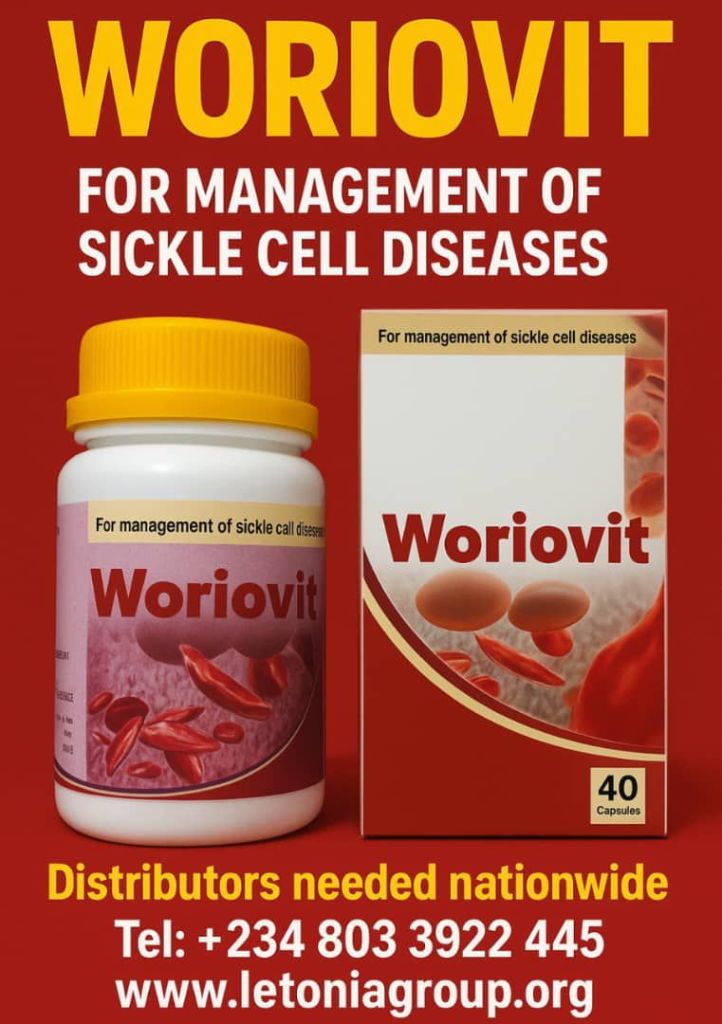
4.4 WORIOVIT®
WORIOVIT® is a proprietary polyherbal formulation developed and produced by Letonia Int’l Ltd through the Herbaceutics framework created by Livy-Elcon Emereonye. It stands as a modern African phytotherapeutic innovation designed to support individuals living with Sickle Cell Diseases.
Phytopharmacological Foundation
WORIOVIT® contains synergistic herbs rich in:
Flavonoids (antioxidant protection)
Alkaloids and phenolic compounds (antisickling and membrane stabilization)
Micronutrients (hemopoietic support)
Anti-inflammatory and circulatory herbs
The formulation adheres to herbaceutic principles of scientific justification, safety evaluation, organ-supportive synergy, standardization, and reproducibility.
Advantages of WORIOVIT® in SCD Management
- Antisickling and Membrane-Stabilizing Effects
Components help maintain RBC shape, reduce sickling under stress, and enhance membrane resilience.
- Enhanced Blood Quality and Regeneration
Supports hemoglobin stability, improves nutrient availability, and boosts natural blood-building processes.
- Reduction in Vaso-Occlusive Crises
Its anti-inflammatory and circulatory herbs minimize crisis triggers and reduce the frequency of painful episodes.
- Immune System Strengthening
WORIOVIT® protects against infections—one of the major complications in SCD patients.
- Detoxification and Organ Protection
Supports liver and spleen health, reduces oxidative load, and promotes systemic detoxification.
- Safe for Integrative Use
Designed to complement, not conflict with, conventional medical management when supervised.
- Affordable, Accessible, and Culturally Grounded
Produced locally, making it cost-effective and culturally relevant to African users, thus improving compliance.
- Mechanisms of Herbal Action
Herbal remedies target several pathophysiological pathways:
5.1 Inhibition of HbS Polymerization
Prevents or reduces sickling under low-oxygen conditions.
5.2 Antioxidant Support
Protects RBCs from oxidative damage associated with hemolysis.
5.3 Anti-inflammatory and Analgesic Action
Reduces pain, swelling, and inflammatory cascades that trigger crises.
5.4 Immune Modulation
Improves resistance to infections, a major cause of morbidity and mortality in SCD.
5.5 Hematopoietic Support
Enhances folate metabolism and promotes natural blood formation.
- Complementary Lifestyle and Nutritional Strategies
Optimal SCD management includes:
Adequate hydration
Folate-rich foods (legumes, vegetables)
Omega-3 fatty acid intake
Avoidance of extreme cold and stress
Regular detoxifying teas (bitter leaf, zobo, scent leaf)
Consistent use of herbal tonics and nutraceuticals like WORIOVIT®
- Safety Considerations
Dosage standardization is essential
Monitor for herb-drug interactions
Some herbs are contraindicated in pregnancy
Use only laboratory-tested, GMP-certified formulations
Periodic liver and kidney function checks are recommended
- Future Prospects
– African herbal medicine offers great promise for:
– Development of new antisickling drugs
– Standardized nutraceuticals
– Integrative clinical protocols
– Pediatric-friendly formulations
– Community-based preventive interventions
WORIOVIT® and similar scientifically developed African products represent the future of phytomedicine in SCD management.
- Conclusion
Herbal medicine provides valuable support in the management of Sickle Cell Disease, particularly within African contexts where ethnomedicine is both accessible and culturally grounded. When guided by science—as seen in herbaceutic innovations like WORIOVIT®—herbal approaches can significantly reduce crisis frequency, enhance blood quality, support immunity, and improve patient outcomes. The most sustainable future lies in integrating validated African phytotherapy with modern biomedical care to build a comprehensive, culturally relevant, and patient-centered approach to SCD management.
PS: Dr. Emereonye could be reached on: +234 803 3922 445
 Dara Network TV