30/12/25
Medical Miracles: When Life Defies Its Own Limits
By Livy-Elcon Emereonye
A miracle, in its broadest and most humane sense, is not necessarily an event that suspends the laws of nature. Rather, it is an outcome that defies prevailing expectations, especially when knowledge, statistics, and experience predict failure, decline, or death. A miracle occurs when the limits we assumed were final quietly reveal themselves to be temporary.
A medical miracle, therefore, is any recovery, survival, adaptation, or therapeutic breakthrough that exceeds established medical forecasts, challenges dominant assumptions, or opens new corridors of healing where none previously seemed possible. It may arrive suddenly or unfold slowly. It may emerge from cutting-edge technology or ancient wisdom. It may be driven by drugs, surgery, herbs, psychology, community care, or the mysterious synergy of all these forces.
A medical miracle does not negate science. It expands science’s humility. It reminds medicine that knowledge is always incomplete, and that life often knows more than our textbooks.
History reminds us that many conditions now treated routinely were once absolute death sentences. Smallpox decimated civilizations. Tuberculosis drained entire generations. Polio imprisoned children in paralysis. HIV/AIDS, within living memory, was spoken of only in whispers of impending death.
Today, many of these conditions are preventable, manageable, or survivable. What changed was not the cruelty of nature, but the depth of human inquiry and perseverance. Every former death sentence turned into a diagnosis is, collectively, a medical miracle.
The eradication of smallpox remains one of humanity’s most astonishing triumphs. A disease that once ravaged continents was eliminated not by chance, but by coordination, courage, vaccination, and the refusal to accept inevitability. The miracle was not one patient’s recovery, but humanity’s shared resolve.
Similarly, HIV/AIDS tells a story of resurrection through persistence. Antiretroviral therapy transformed despair into durability. Millions now live long, productive lives — not because the virus vanished, but because medicine learned to coexist with it. The miracle was not instant cure, but sustained life with dignity.
On the other hand, Africa’s medical miracle stories are often underreported, yet they are profound and instructive.
Dr. Catherine Nyongesa, a Kenyan oncologist, pioneered pediatric cancer care at the Texas Cancer Center in Eldoret. In a context where childhood cancer was once an unspoken death sentence, her work dramatically improved survival rates for children with leukemia and solid tumors. Each child who returned to school after chemotherapy represented not just clinical success, but a miracle of access, advocacy, and compassion.
Professor Oyewale Tomori, a renowned Nigerian virologist, played a critical role in Africa’s response to viral epidemics, including Ebola and Lassa fever. His work strengthened disease surveillance and outbreak response across the continent. Thousands of lives saved through early detection and containment may never be individually named, but collectively they form one of Africa’s great modern medical miracles.
During the Ebola outbreaks, survival itself was extraordinary. Patients such as Pauline Cafferkey, who survived severe Ebola infection after experimental treatment, and unnamed African survivors who endured isolation, stigma, and near-certain death, reshaped global understanding of viral care. Many later developed antibodies that contributed to research and vaccine development — turning survival into service to humanity.
The impact COVID-19 on HIV/AIDS should open another vista of medical miracles.
Also a look at sickle cell survivors in Nigeria and Ghana can bring about certain lessons.
In West Africa, sickle cell disease once claimed most patients before adulthood but today, due to newborn screening, better hydration protocols, pain management, blood transfusion strategies, and community education, thousands now live into middle age and beyond. Each adult living with sickle cell in Africa represents a quiet but revolutionary medical miracle — not of cure alone, but of continuity.
In the continuum of the past, the present and the future, traditional knowledge meets modern validation – and with a little sparkle miracles happen.
African herbal medicine has long supported healing where formal systems were absent. Plants such as Garcinia kola, Morinda lucida, Azadirachta indica (neem), and Artemisia species were used for fever, inflammation, infections, and immune support long before laboratories confirmed their pharmacological properties.
When modern science later validates indigenous wisdom, it does not create the miracle — it recognizes one that already existed. This dialogue between ancestral knowledge and contemporary research is itself a medical miracle of continuity rather than conflict.
The human body is philosophical wonder – and the mind the wonder fountain.
Philosophically, the human body challenges reductionism. It is not merely a machine of parts, but a self-organizing intelligence. Cells communicate. Systems compensate. Organs adapt. The body remembers past infections and prepares for future threats.
Patients awaken after prolonged comas. Brains rewire after strokes. Some cancers regress unexpectedly. These phenomena humble medicine and echo an ancient philosophical truth: life is not passive matter; it is active intention.
The Stoics believed nature possessed an internal rationality. African philosophies speak of vital force. Modern biology speaks of homeostasis and resilience. Different languages — same wonder.
Time is not only miracle but every miracle is a function of space and time!
Not all medical miracles culminate in cure. Some culminate in time.
A terminal patient lives long enough to reconcile with estranged family. A mother survives childbirth complications to hold her child. A grandfather lives to bless a grandchild. These moments are not medical failures; they are existential victories.
In palliative care, relief from pain, preservation of dignity, and peace of mind become profound miracles. Here, medicine aligns with philosophy’s oldest concern: how to live meaningfully, even in the presence of death.
One’s mystery can be another person’s mastery so the union of mind and spirituality on the altar of radicalized meaning cannot be wished away. In the pursuit, and in the conquest, of knowledge, complex things can be made simple by the earnest seeker.
Across cultures, healing has never been purely physical. African spirituality, Eastern philosophies, and even modern psychology converge on one truth: meaning strengthens endurance.
Hope is not superstition. It is biological. It modulates stress hormones, strengthens immunity, and improves adherence to treatment. Faith — whether religious or existential — anchors the mind against despair.
This does not mean belief replaces medicine. It means belief partners with medicine. Healing is participatory. The patient is not a battlefield but a collaborator.
As Viktor Frankl observed, those who find meaning endure suffering differently. Medical miracles often occur where meaning refuses to collapse.
Let it be stated without fear or favour that compassion is the most underrated medicine no sane person can ignore.
One of the greatest medical miracles is care itself.

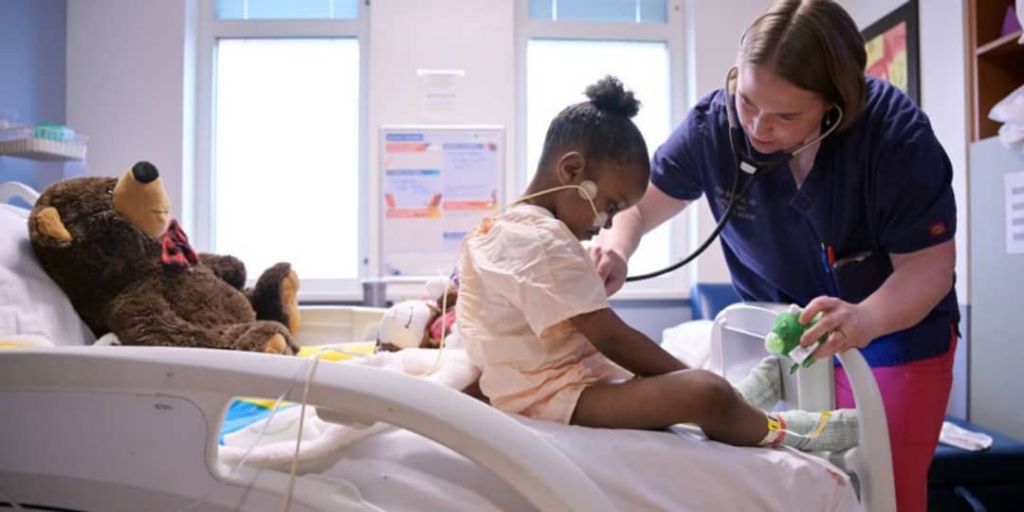
A nurse who notices subtle deterioration. A doctor who listens beyond symptoms. A caregiver who refuses abandonment. Compassion builds trust, and trust improves outcomes. Healing is not only chemical; it is relational.
In overstretched African clinics and advanced Western hospitals alike, kindness often heals wounds that prescriptions cannot reach.
Among other things, medical miracles matter because they defend humanity against fatalism. They remind us that prognosis is not destiny, statistics are not verdicts, and knowledge is never complete.
They teach science humility and patients courage. They insist that what appears final today may be provisional tomorrow.
Above all, they affirm a simple but radical truth: life is stubborn. It resists extinction, adapts under pressure, and surprises even its most careful observers.
It should be noted that medical miracles are not relics of ancient legends. They occur daily — in research laboratories, rural clinics, hospital wards, and private homes. Some arrive with headlines; most arrive quietly.
As long as humanity continues to learn, care, imagine, and hope, medical miracles will persist — not always as dramatic cures, but as steady affirmations that life refuses to surrender easily.
And perhaps that, in the deepest philosophical and spiritual sense, is the greatest miracle of all.o
 Dara Network TV