Executive Members Of Association of Hospital and Administrative Pharmacists of Nigeria Call For Continuous Support

02/03/21

Writtern By Dr. Kingsley Chiedu Amibor FPC Pharm*

National Chairman AHAPN

Publisher: DANIELS G.O

Dear Colleagues,

Greetings from the National Executive Committee (NEC) of our great Association AHAPN. I sincerely wish to appreciate you all for the support extended to NEC since the inception of our administration, and 2021 in particular.

As the countdown to the end of our tenure commences in earnest, it has become imperative to update our members on the activities of our Association.

1. *Implementation of Consultancy Pharmacy Circular*

You may recall that at the last Town Hall Meeting held via Zoom on this matter, it was resolved that a decentralized approach would be pursued in the implementation efforts. Reports reaching NEC seem to suggest that some institutions are having challenges getting their various hospital managements to implement the Circular. We urge our members not to be discouraged by the antics of our detractors, but to continue to employ all legal means to circumvent the challenges, including interacting with their various boards of management and any other group that may be of assistance in achieving our desired objectives.

2. *Reintroduction of Public Private Partnership (PPP) in Pharmacy Departments of tertiary Health institutions*

Not too long ago, we received very disturbing report of the management of a tertiary institution in North Central Nigeria, concluding plans to introduce PPP in that institution, on the excuse that medicines are not continuously available in the hospital. NEC also gathered that there may be a directive from the Federal Ministry of Health to chief medical directors (CMDs) to introduce PPP in hospitals where pharmacists cannot ensure continuous medicines availability. We wish to state categorically that there is a subsisting directive from the Council of the Pharmaceutical Society of Nigeria (PSN) to deal ruthlessly with any pharmacist that connives with any CMD to undermine Pharmacy Departments of our hospitals. AHAPN members are encouraged to report any pharmacist who is involved in trying to flout the directives of the PSN irrespective of practice setting.

On our part, sequel to the directive of the Honourable Minister of Health during our visit in October 2020, AHAPN set up a Committee charged with the mandate of drawing up a new Drug Revolving Fund Scheme that will make medicines continuously available in our hospitals without the encumbrances of the current scheme. We are aware that Committee headed by one of our best hands, Dr. Margaret Obono FPSN, has advertised for memoranda from our members on how to revive or resuscitate the DRF. We encourage you all to submit your memoranda to them in good time so they can finish their tasks early enough.

3. *AHAPN National Scientific Conference “Kwara 2021″*

As you are aware already, our national conference for 2020 did not hold due to the COVID-19 pandemic and was rescheduled to 2021. I wish to seize this opportunity on behalf of NEC to commend the Conference Planning Committee (CPC) ably led by Dr. Funmilayo Oluwatimilehin FPSN for the good job they are engaged in planning a befitting conference come August 2021. Paucity of funds continues to be a challenge, despite all measures put in place to facilitate ease of payment of capitation to the national body. For instance, as at today, less than 300 out of about 3,500 hospital and administrative pharmacists have paid their capitation to AHAPN National. If this trend continues, the implication is that the National body may not be able to fund our numerous activities, including this year’s national conference. It is instructive to note that last year 2020, less than 1,000 AHAPN members paid capitation to National. We hereby appeal to our members to reconsider their stand on capitation payment so that the National body will be able to fulfill our campaign promises to our members.

4. *COVID-19 Pandemic*

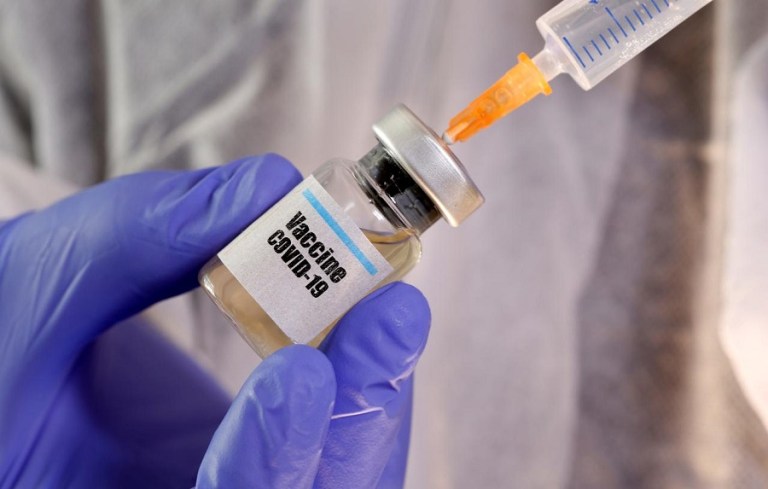
The COVID-19 pandemic continues to take its toll on nations of the world, including Nigeria. Our members too have not been spared, as we painfully lost several to the pandemic at the beginning of the year. May their souls rest in peace. We urge all our members to continuously observe Nigeria Centre for Disease Control (NCDC) COVID-19 Protocols for control of the infection. In the same vein, we expect our members will not be left out when vaccination of healthcare workers commences as promised by the federal government.

5. *Partnership with PSN*

AHAPN National is partnering with our national body, the PSN to ensure adequate and timely representation of Pharmacists in health matters at both National Assembly Committees on Health, FMOH and other agencies of government.

6. *AHAPN Committee Assignments*

Various committees have been set up to enable us achieve our objectives. Some of these Committees are the Editorial Committee, which is charged with producing our Public Health Pharmacists Magazine, AHAPN Byelaws Review Committee, AHAPN New DRF Committee, AHAPN Fund Raising Committee, AHAPN Privileges Committee and so on. We urge our members to give the Committees all the necessary support so that together, we can achieve more.

7. *Training on Research Methodology*

In line with AGM decision of 2019, AHAPN National is organising a training workshop on Research Methodology for our members which we hope will hold this month of March. We are currently discussing with our resource persons. We encourage everyone to make the maximum use of that workshop when the time comes.

In conclusion, I wish to once again thank all AHAPN members for your support to AHAPN National to date, even as we seek your greater support as our tenure gradually comes to an end. Yes, there are challenges confronting our practice, but I am sincerely convinced that the future of Pharmacy is bright, especially with God on our side.

I wish everyone a happy new month.

Thank you. God bless you all.

Long live AHAPN!

Long live PSN!

Long live the Pharmacy Profession.
WORLD HEARING DAY.1 in 4 people projected to have hearing problems by 2050…WHO

02/30/21

DANIELS G.O

News release

Nearly 2.5 billion people worldwide ─ or 1 in 4 people ─ will be living with some degree of hearing loss by 2050, warns the World Health Organization’s (WHO) first World Report on Hearing, released Tuesday

The Report says At least 700 million of these people will require access to ear and hearing care and other rehabilitation services unless action is taken.

“Our ability to hear is precious. Untreated hearing loss can have a devastating impact on people’s ability to communicate, to study and to earn a living. It can also impact on people’s mental health and their ability to sustain relationships,” said Dr Tedros Adhanom Ghebreyesus, WHO Director-General. “This new report outlines the scale of the problem, but also offers solutions in the form of evidence-based interventions that we encourage all countries to integrate into their health systems as part of their journey towards universal health

The report, launched ahead of World Hearing Day on 3 March, underlines the need to rapidly step up efforts to prevent and address hearing loss by investing and expanding access to ear and hearing care services. Investment in ear and hearing care has been shown to be cost-effective: WHO calculates that governments can expect a return of nearly US$ 16 for every US$ 1 invested.

Main findings of the report

Lack of accurate information and stigmatizing attitudes to ear diseases and hearing loss often limit people from accessing care for these conditions. Even among health-care providers, there’s often a shortage of knowledge about prevention, early identification and management of hearing loss and ear diseases, hampering their ability to provide the care required.

In most countries, ear and hearing care is still not integrated into national health systems and accessing care services is challenging for those with ear diseases and hearing loss. Moreover, access to ear and hearing care is poorly measured and documented, and relevant indicators are lacking in the health information system.

But the most glaring gap in health system capacity is in human resources. Among low-income countries, about 78% have fewer than one ear, nose and throat (ENT) specialist per million population; 93% have fewer than one audiologist per million; only 17% have one or more speech therapist per million; and 50% have one or more teacher for the deaf per million. This gap can be closed through integration of ear and hearing care into primary health care through strategies such as task sharing and training, outlined in the report.

Even in countries with relatively high proportions of ear and hearing care professionals, there is unequal distribution of specialists. This not only poses challenges for people in need of care, but also places unreasonable demands on the cadres providing these services.

Main causes of hearing loss

In children, almost 60% of hearing loss can be prevented through measures such as immunization for prevention of rubella and meningitis, improved maternal and neonatal care, and screening for, and early management of, otitis media – inflammatory diseases of the middle ear. In adults, noise control, safe listening and surveillance of ear Diseases

***Identification is the first step in addressing hearing loss and related ear diseases. Clinical screening at strategic points in life ensure that any loss of hearing and ear diseases can be identified as early as possible.

***Recent technological advances, including accurate and easy-to-use tools, can identify ear disease and hearing loss at any age, in clinical or community settings, and with limited training and resources. Screening can even take place in challenging situations such as those encountered during the COVID-19 pandemic and those living in underserved and remote areas of the world.

Access to timely and appropriate care

Once diagnosed, early intervention is key. Medical and surgical treatment can cure most ear diseases, potentially reversing the associated hearing loss. However, where hearing loss is irreversible, rehabilitation can ensure that those affected avoid the adverse consequences of hearing loss. A range of effective options are available.

Hearing technology, such as hearing aids and cochlear implants, when accompanied by appropriate support services and rehabilitative therapy are effective and cost-effective and can benefit children and adults alike.

The report notes that the use of sign language and other means of sensory substitution such as speech reading are important options for many deaf people; hearing assistive technology and services such as captioning and sign language interpretation can further improve access to communication and education for those with hearing loss.

To ensure that the benefit of these technological advances and solutions is equitably accessible to all, countries must adopt an integrated people-centered approach,” said Dr Bente Mikkelsen, Director of the WHO Department of Noncommunicable Diseases. “Integrating ear and hearing care interventions within national health plans and delivering these through strengthened health systems, as part of universal health coverage, is essential to meet the needs of those at risk of or living with hearing loss.”

SENATE PASSES BILL STOPPING PEDOPHILES AND RAPIST FROM WORKING WITH CHILDREN

02/03/21

DANIELS G.O

Senate bans pedophiles, rapist from working with children

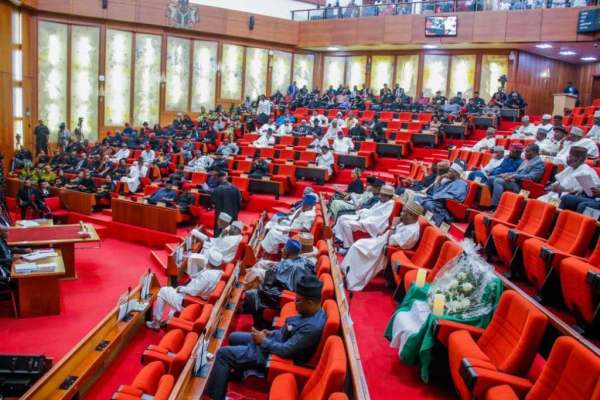
The Nigerian Senate on Tuesday
passed an amendment to the child’s rights act of 2003 making anyone convicted of sexual offence unfit to work with children.

This followed the presentation of report by the Chairman of the committee on women affairs, Betty Apiafi on the child’s rights act amendment

The lawmakers noted that this amendment will further give protection to the Nigerian child against any form of sexual violence and abuse suffered in the hands of caregivers and others.

The Senate also passed the older persons rights and privileges bill which aims to address the social and economic challenges triggered by aging and the need for government to formulate policies that will incorporate the elderly and cater for their well-being.

The bill also provides for a fine of 2 million naira or 200,000 from organizations or individuals respectively who discriminates against older persons

W.H.O DECLARE EL-SALVADOR MALARIA FREE

26/02/21

PUBLISHER.DANIELS G.O

PRESS RELEASE

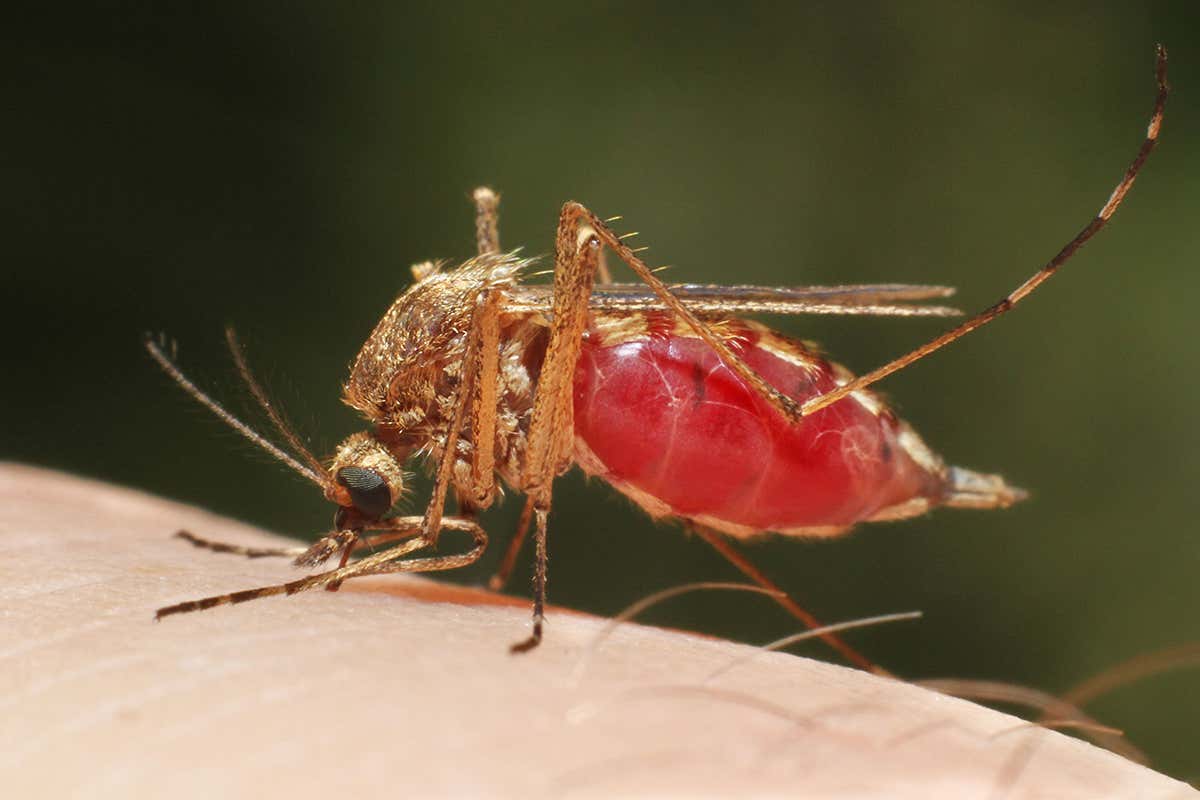
El Salvador Thursday 25th of February 2021 Was declared Malaria Free to became the first country in Central America to be awarded a certification of malaria elimination by the World Health Organization (WHO).

The certification follows more than 50 years of commitment by the Salvadoran government and people to ending the disease in a country with dense population and geography hospitable to malaria.

“Malaria has afflicted humankind for millennia, but countries like El Salvador are living proof and inspiration for all countries that we can dare to dream of a malaria-free future,” said Dr.Tedros Adhanom Ghebreyesus, WHO Director-General.

Certification of malaria elimination is granted by WHO when a country has proven, beyond reasonable doubt, that the chain of indigenous transmission has been interrupted nationwide for at least the previous three consecutive years.

With the exception of one outbreak in 1996, El Salvador steadily reduced its malaria burden over the last three decades. Between 1990 and 2010, the number of malaria cases declined from more than 9000 to 26. The country has reported zero indigenous cases of the disease since 2017.

“For decades, El Salvador has worked hard to wipe out malaria and the human suffering that it generates,” said Dr. Carissa F. Etienne, Director of the Pan American Health Organization (PAHO), WHO’s regional office for the Americas. “Over the years, El Salvador has dedicated both the human and financial resources needed to succeed. This certification today is a life-saving achievement for the Americas.”

El Salvador is the third country to have achieved malaria-free status in recent years in the WHO Region of the Americas, following Argentina in 2019 and Paraguay in 2018. Seven countries in the region were certified from 1962 to 1973. Globally, a total of 38 countries and territories have reached this milestone.

El Salvador’s Minister of Health, Dr Francisco José Alabi Montoya, said: “The people and the government of El Salvador, together with its health workers, have fought for decades against malaria. Today we celebrate this historical achievement of having El Salvador certified malaria free.”

El Salvador’s road to elimination

El Salvador’s anti-malaria efforts began in the 1940s with mechanical control of the malaria vector – the mosquito – through construction of the first permanent drains in swamps, followed by indoor spraying with the pesticide DDT. In the mid-1950s, El Salvador established a National Malaria Program (CNAP) and recruited a network of community health workers to detect and treat malaria across the country. The volunteers, known as “Col Vol,” registered malaria cases and interventions. The data, entered into health information systems by vector control personnel, allowed for strategic and targeted responses across the country.

By the late 1960s, progress had slowed as mosquitoes developed resistance to DDT. An expansion in the country’s cotton industry is thought to have fueled a further rise in malaria cases. Throughout the 1970s, there was a surge of migrant laborers on cotton estates in coastal areas near mosquito breeding sites, in addition to discontinued use of DDT. El Salvador experienced a resurgence of malaria, reaching a peak of nearly 96 000 cases in 1980.

With the support of PAHO, the US Centers for Disease Control and Prevention (CDC), and the US Agency for International Development (USAID), El Salvador successfully reoriented its malaria Programme

NATIONAL PRIMARY HEALTH CARE DEVELOPMENT AGENCY PREPARES FOR COVID-19 VACCINATION ROLLOUT

PRESS RELEASE

As part of preparation to ensure efficient and effective vaccination activities, a self e-registration link that will enable Nigerians register themselves, obtain their pre-vaccination numbers ,Choose their preffered date and time for vaccination has been created.

In a statement signed by the executive director, national primary health care development agency, Faisal Shuaib said the link will be provided in the coming days.

The statement added, that a nationwide training programme for health workers that will be involved in the covid-19 vaccination at the national and state level is on

Over 13,000 health care workers have been trained at the national training of trainers in the first phase

The training involves participant from national state and local government levels and is aimed at updating the skills of health care workers in the effective handling, storage and administration of COVID-19 vaccines ahead of arrival.
days.
The Executive Director/CEO, NPHCDA, Faisal Shuaib Urge Nigerians, particularly health care workers nationwide to take advantage of the opportunity provided by the Federal Government to protect themselves and curb the spread of COVID-19.

5G NETWORK A POTENTIAL SECURITY…OFFICE OF NATIONAL SECURITY ADVISER

26/03/21

DANIELS G.O

PRESS RELEASE

The deployment of the 5th Generation 5G Network can become a security threat to National Security if left in the wrong Hands according to emerging warning from the Office of the National Security Adviser (NSA) .

The Director of Communications Office of the National Security Adviser, Bala Fakandu gave the warning during an investigative public hearing on the present status of 5th Generation (5G) network in Nigeria & its technological impact on Nigerians by the Senate Joint Committee on Communications, Science and Technology, ICT on Thursday In Abuja

He said (5G) Network will require telecommunications operators in Nigeria to upgrade their equipment to the new technology adaptable (5G) network which if not properly deployed could serve as tools for eavesdropping, cyber attacks and even espionage by external forces.

He said the Office of the NSA shared its fears with the Nigerian Communications Commission (NCC) during its initial trial of the technology in the country and expects that the concerns will be properly addressed in the draft national policy when it is ready.

“We are aware that the deployment of 5G will come with different equipment. We are concerned about eavedropping I, cyber attacks, espionage by external forces. But they are things that needs to be put in the National policy for operators”.

This was as the Director of Communications (NSA) confirmed that no operator has been issued licence to deploy (5G) network.

The Office of the National Security Adviser however said it was on the same page with the Minister of Communications, Isa Ali Pantami who had earlier told the federal lawmakers that Nigeria was ready to deploy (5G) Network technology; after completing its first trial last September.

Pantami said all that was left is to complete the draft national policy required to drive the process of deployment in Nigeria.

He said once the draft national policy is ready the NCC being the regulator is expected to come up with its own guidelines for operators.

The Minister said the Federal Government did not just arrived here without proper and extensive consultations with critical stakeholders including all security agencies; pointing out that the Federal Government will never jeopardize the security and health of citizens.

On whether it has negative impact on the lives and health of citizen; Pantami said all available research including that of World Health Organization (WHO) and International Telecommunications Union(ITU) have shown there are no
adverse health effects.

He said there is no scientific proof linking Covid-19 to the deploy of (5G) technology or indeed any other disease; stressing that the radiation in the current (4G) is more harmful compared to (5G).

According to him, the radiation in the kitchen microwave is more hazardous than the (5G) which he said is an advancement of the (4G).

The Minister appealed to Nigerians to disregard the myths surrounding (5G) and embrace the technology with open hands.

He said when the myth was flying around in Nigeria last April that Covid-19 was caused by radiation from (5G); Lesotho had already deployed the technology and had no case of Covid-19.

USAID launches Human Resources for Health Activity

24/02/21

DANIELS G.O

PRESS RELEASE

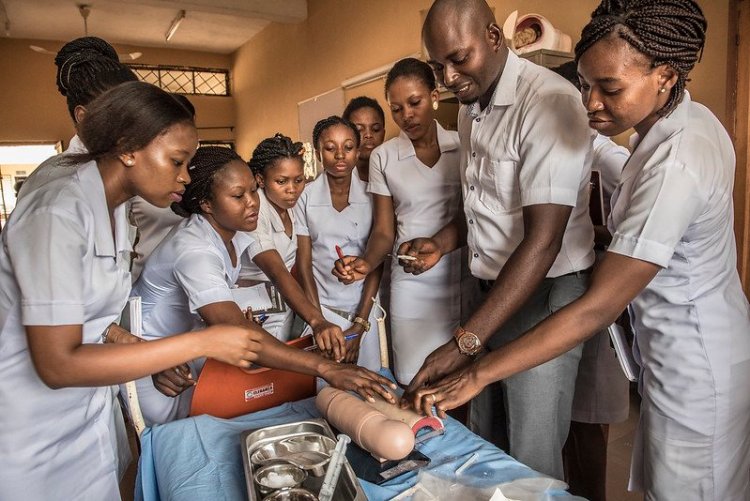
PHOTO CAPTION: The new USAID Health Workforce Management will help Nigeria produce a cadre of 100,000 new health workers competent to respond to current and future health needs of the populations in the targeted states.

USAID launches Human Resources for Health Activity

‘Health Workforce Management’ will train 100,000 by 2025

Abuja – On February 23, 2021, the U.S. Agency for International Development (USAID) Health Office Director Paul McDermott and key government health sector officials participated in a launch of a new USAID funded activity to improve the quality of health worker training in Nigeria.

The five-year, $19 million Health Workforce Management activity will support the establishment of a cost-effective, well-trained, and motivated health workforce in targeted rural and remote areas of Bauchi, Sokoto, Kebbi, and Ebonyi States, as well as the Federal Capital Territory.

We are investing in the health workforce because strong and capable human resources for health improve health outcomes and save lives,” McDermott said at the virtual ceremony. “The activity will support efforts to address the persistent healthcare worker challenges in Nigeria.”

Health Workforce Management will strengthen human resources, improve governance of the health workforce, and develop interventions to improve health worker retention. Over the next five years, the activity is expected to produce a cadre of 100,000 new health workers competent to respond to current and future health needs of the populations in the targeted states.

Health Workforce Management will train these primary health care workers to anchor a more proficient workforce to respond to health needs, improve the distribution and skill mix of front-line workers, and strengthen training institutions to adopt and apply more effective approaches to human resources.

“This initiative could not have come at a better time,” said Dr. Usman Adamu, Director of Primary Health Care Services Development at the National Primary Healthcare Development Agency. “It will be most beneficial to address maldistribution of health workers by producing the appropriate skill mix of frontline health workers at the primary care level. We look forward to positive change and assure USAID of our collaboration and support all the way.”

The activity will be implemented by Banyan Global in collaboration with Abt Associates, Institute for Healthcare Improvement and Solina Health. It is part of USAID’s integrated package of activities valued at $793 million that is focused on integrating health service delivery at the primary level, creating demand for health services, and strengthening supply chain management at the sub-national level.

WORKERS PROTEST IN ABUJA TURNS VIOLENT AS SUSPECTED THUGS HIJACK PROCESS

24/02/21

DANIELS G.O

WORKERS PROTEST

Wednesday Protest by workers at the headquaters of the cooperate affairs commission turned violent as hired thugs make efforts to set ablaze vehicles of protesting members of the Nigeria Labour Congress led by its president Ayuba wabba.

The Thugs suspected to be members of an affiliate union of the Trade union congress, led by general secretary of SSASCGOC, Ayo Olorunfemi prevented NLC members access into the CAC displaying banners describing NLC unions as defrauding clients.

The incident crippled activities at the CAC headquarters , with potential clients for company registration stranded outside.

Among the issues raised by NLC is that the Corporate Affairs Commission management led By the registrar Garba Abubakar is undermining workers right.

LAGOS STATE GOVT SHUTS 16 ILLEGAL, SUBSTANDARD PHARMACIES AND PATENT MEDICINE STORES

23/02/21

PUBLISHER DANIELS G.O

PRESS RELEASE

Lagos State Taskforce on Counterfeit, Fake Drugs and Unwholesome Processed Foods has shut 16 illegal, substandard and unregistered pharmacies, patent medicine stores and premises at Ajegunle and Alaba Suru axis of Ajeromi Ifelodun Local Government area of the state.

The Commissioner for Health, Professor Akin Abayomi who disclosed this today while reviewing report of the monitoring, inspection and enforcement exercise carried out by the Task Force through the Pharmaceutical Inspectorate Unit (PIU) of the Pharmaceutical Services Directorate of the Ministry of Health, stated that the sealing of the affected pharmacies and patent medicine stores was in accordance with the provisions of Section C34 of the Counterfeit, Fake Drugs and Unwholesome Processed Foods Miscellaneous Provision Act of 1999.

He explained that the affected pharmacies and patent medicine shops were sealed for offences bordering on operations without license, engaging unqualified persons to man and dispense drugs to unsuspecting citizens, operating beyond scope through sale of ethical products and displaying and storing drugs in unconducive environments which compromises the potency of the drugs, rendering them ineffective.

The Commissioner however stressed that only licensed patent medicine vendors are authorized to sell drug products in their original and approved pack size as produced by the manufacturing companies noting that the law prohibits wholesaling of drugs by patent medicine vendors and prohibits wholesalers from retailing drugs.

While noting that the recent operation of the taskforce was coming on the heels of the war being waged against fake drugs and illegal drug shops, Abayomi warned that the activities of the State Task Force on Fake Drugs would not only be sustained, but intensified until operators in the sector adhere strictly to the provisions of the law on running of pharmacies and patent medicine shops, in order to safeguard the health of the citizenry.

He stressed that the State Government remains committed to putting a halt to the ugly trend of having unqualified personnel deal with drug and will continue to insist that the environment for the dispensation of medical care should be suitable for the promotion and maintenance of good health.

Speaking in the same vein, Director Pharmaceutical Services in the Ministry, Dr. Mosunmola Beacley said that the State Government will not relent in its efforts to stop the inherent dangers associated with the operations from unlicensed pharmaceutical outlets and drug shops.

She added that the Task Force has been re-energized to intensify the on-going war against fake, expired and substandard drugs being peddled by unlicensed and illegal premises.

“This closure is thus part of the government’s renewed efforts to sanitize the drug distribution system and curb proliferation of fake drugs in the State” She said.

Beckley disclosed that an investigative meeting would be held with owners of the sealed premises to make further inquiries on the status of the sealed premises and to notify them of the procedures and appropriate conditions to be met for reopening in line with government regulations.

The enforcement exercise was carried out in collaboration with the National Agency for Food Drug Administration and Control (NAFDAC), Pharmacists’ Council of Nigeria (PCN), Pharmaceutical Society of Nigeria (PSN), Federal Taskforce on fake drugs and the Police Officers from Environmental and Special Offences Unit (Task Force) of Lagos Police Command.

Signed

Tunbosun Ogunbanwo

Director, Public Affairs

23rd February, 2021