Herbal Approach to the Management of Sickle Cell Disease (SCD): An Integrative African Perspective with Emphasis on Herbaceutics and WORIOVIT

22/11/25

Herbal Approach to the Management of Sickle Cell Disease (SCD): An Integrative African Perspective with Emphasis on Herbaceutics and WORIOVIT®

By Livy-Elcon Emereonye

  1. Introduction

Sickle Cell Disease (SCD) is a genetic hemoglobinopathy characterized by chronic hemolysis, vaso-occlusive crises, recurrent infections, organ dysfunction, and reduced quality of life. Although modern biomedical therapy plays a central role in disease management, the high burden of SCD in Africa—especially among populations with deep-rooted ethnomedicinal traditions—has sustained the relevance of herbal medicine as a complementary and often integrative intervention.

Herbal remedies contain diverse bioactive compounds with antioxidant, antisickling, anti-inflammatory, membrane-stabilizing, and immunomodulatory effects. These properties make them promising adjuncts for reducing crisis frequency, enhancing blood quality, and supporting overall patient resilience.

  1. Rationale for Herbal Management of SCD

Herbs commonly used in SCD management are rich in:

Flavonoids – potent antioxidants that protect red blood cells from oxidative stress

Phenolic compounds & tannins – stabilize cell membranes and reduce polymerization

Alkaloids – some demonstrate direct antisickling activity

Fatty acids – promote membrane fluidity and reduce hemolysis

Micronutrients – enhance hemopoiesis and immunity

Herbal interventions therefore seek to:

Improve hemoglobin stability

Reverse or reduce sickling under hypoxic conditions

Enhance RBC hydration

Reduce inflammation and pain crises

Improve immunity

Support detoxification and organ function (liver, spleen, kidneys)

  1. Key Antisickling and Supportive Medicinal Plants

3.1 Carica papaya (Pawpaw) Leaf Extract

Rich in alkaloids, flavonoids, and saponins; exhibits marked antisickling and membrane-stabilizing effects.

3.2 Zanthoxylum zanthoxyloides (Fagara)

A well-researched West African plant with strong HbS polymerization-inhibitory properties.

3.3 Cajanus cajan (Pigeon Pea)

Improves hemoglobin stability, scavenges free radicals, and reverses sickled erythrocytes in vitro.

3.4 Artemisia annua

Potent antioxidant and anti-inflammatory herb; reduces malaria co-morbidity, which often worsens SCD.

3.5 Vernonia amygdalina (Bitter Leaf)

Supports detoxification, improves blood quality, and provides long-term nutritional reinforcement.

3.6 Hibiscus sabdariffa (Zobo/Roselle)

High in anthocyanins; enhances hydration and antioxidant status.

3.7 Garcinia kola (Bitter Kola)

Improves microcirculation, protects red blood cells, and reduces inflammation.

3.8 Allium sativum (Garlic)

Boosts immunity, improves circulation, and reduces infection-related crises.

  1. Notable African Polyherbal Formulations

4.1 Niprisan / Nicosan® (NIPRD), Niclovix® (May & Baker) Nigeria.

They are validated products derived from medicinal herbs.

They inhibit hemoglobin polymerization, improves RBC morphology, and reduces crisis frequency.

4.2 Ethnomedicinal Igbo Herbal Approaches

Igbo traditional medicine manages SCD through:

Blood-strengthening herbs (e.g., ugbú, local iron-rich tonics)

Detoxifying bitters

Immune-supportive botanicals

Crisis-relieving aromatic herbs such as nchanwu (scent leaf)

Igbo healing philosophy views SCD crises as disturbances in the mmụọ–ahụ (spirit–body) balance, requiring both physiological and energetic stabilization.

4.3 Neem-Based Formulations (Azadirachta indica)

Commonly used for immune support, detoxification, and chronic pain modulation.

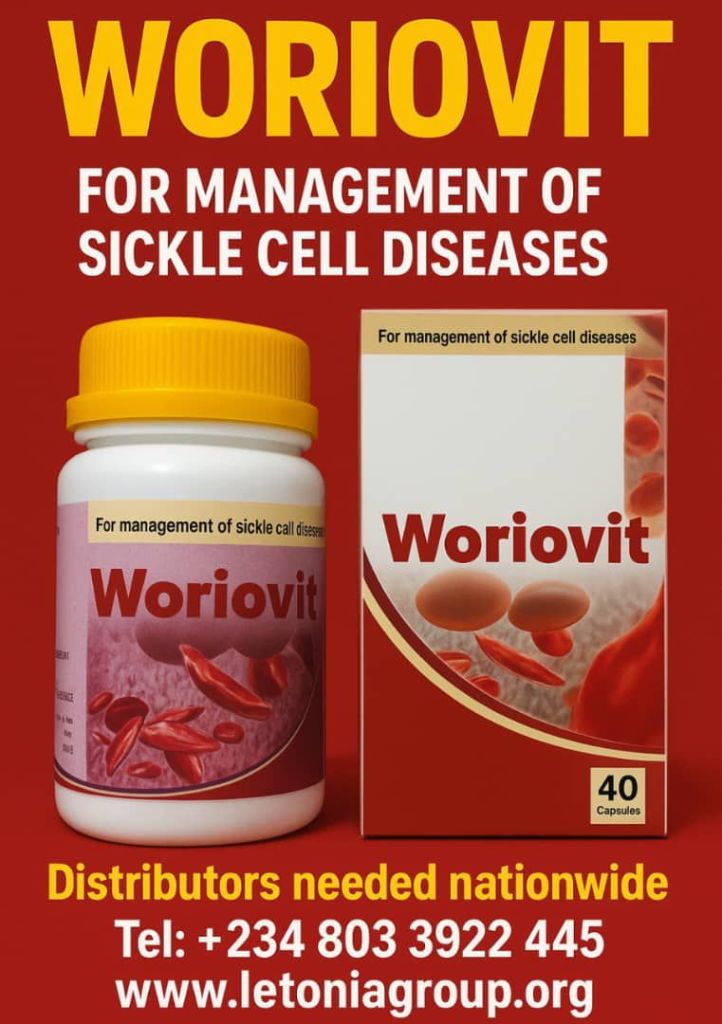
4.4 WORIOVIT®

WORIOVIT® is a proprietary polyherbal formulation developed and produced by Letonia Int’l Ltd through the Herbaceutics framework created by Livy-Elcon Emereonye. It stands as a modern African phytotherapeutic innovation designed to support individuals living with Sickle Cell Diseases.

Phytopharmacological Foundation

WORIOVIT® contains synergistic herbs rich in:

Flavonoids (antioxidant protection)

Alkaloids and phenolic compounds (antisickling and membrane stabilization)

Micronutrients (hemopoietic support)

Anti-inflammatory and circulatory herbs

The formulation adheres to herbaceutic principles of scientific justification, safety evaluation, organ-supportive synergy, standardization, and reproducibility.

Advantages of WORIOVIT® in SCD Management

  1. Antisickling and Membrane-Stabilizing Effects

Components help maintain RBC shape, reduce sickling under stress, and enhance membrane resilience.

  1. Enhanced Blood Quality and Regeneration

Supports hemoglobin stability, improves nutrient availability, and boosts natural blood-building processes.

  1. Reduction in Vaso-Occlusive Crises

Its anti-inflammatory and circulatory herbs minimize crisis triggers and reduce the frequency of painful episodes.

  1. Immune System Strengthening

WORIOVIT® protects against infections—one of the major complications in SCD patients.

  1. Detoxification and Organ Protection

Supports liver and spleen health, reduces oxidative load, and promotes systemic detoxification.

  1. Safe for Integrative Use

Designed to complement, not conflict with, conventional medical management when supervised.

  1. Affordable, Accessible, and Culturally Grounded

Produced locally, making it cost-effective and culturally relevant to African users, thus improving compliance.

  1. Mechanisms of Herbal Action

Herbal remedies target several pathophysiological pathways:

5.1 Inhibition of HbS Polymerization

Prevents or reduces sickling under low-oxygen conditions.

5.2 Antioxidant Support

Protects RBCs from oxidative damage associated with hemolysis.

5.3 Anti-inflammatory and Analgesic Action

Reduces pain, swelling, and inflammatory cascades that trigger crises.

5.4 Immune Modulation

Improves resistance to infections, a major cause of morbidity and mortality in SCD.

5.5 Hematopoietic Support

Enhances folate metabolism and promotes natural blood formation.

  1. Complementary Lifestyle and Nutritional Strategies

Optimal SCD management includes:

Adequate hydration

Folate-rich foods (legumes, vegetables)

Omega-3 fatty acid intake

Avoidance of extreme cold and stress

Regular detoxifying teas (bitter leaf, zobo, scent leaf)

Consistent use of herbal tonics and nutraceuticals like WORIOVIT®

  1. Safety Considerations

Dosage standardization is essential

Monitor for herb-drug interactions

Some herbs are contraindicated in pregnancy

Use only laboratory-tested, GMP-certified formulations

Periodic liver and kidney function checks are recommended

  1. Future Prospects

– African herbal medicine offers great promise for:

– Development of new antisickling drugs

– Standardized nutraceuticals

– Integrative clinical protocols

– Pediatric-friendly formulations

– Community-based preventive interventions

WORIOVIT® and similar scientifically developed African products represent the future of phytomedicine in SCD management.

  1. Conclusion

Herbal medicine provides valuable support in the management of Sickle Cell Disease, particularly within African contexts where ethnomedicine is both accessible and culturally grounded. When guided by science—as seen in herbaceutic innovations like WORIOVIT®—herbal approaches can significantly reduce crisis frequency, enhance blood quality, support immunity, and improve patient outcomes. The most sustainable future lies in integrating validated African phytotherapy with modern biomedical care to build a comprehensive, culturally relevant, and patient-centered approach to SCD management.
PS: Dr. Emereonye could be reached on: +234 803 3922 445


Are you faced with an insurmountable circumstance today? Learn to see what God sees by meditating on His Word, and let His peace drive out your anxiety. Let His wisdom direct your paths.

GOSPEL CORNER

21/11/25

Joel Osteen Ministries

Today’s Word
Today’s Scripture
They brought the jars to the widow and she kept pouring. When all the jars were full, she said to her son, “Bring me another one.” But he replied, “There is not a jar left.” Then the oil stopped flowing.
2 Kings 4:5–6, NIV


Provision Through Humility


In 2 Kings 4, a poor widow had no money to pay her creditors who were coming to take her two sons as slaves. The prophet Elisha told her to borrow as many jars as she could from her neighbors and pour the little bit of oil she had into the jars. How did that make sense? But she took that first step of obedience, humbling herself before her neighbors, and never questioned the prophet’s word. Had she not kept pouring and pouring, she would have missed her miracle and lost her sons and livelihood.

Always do what God is asking you to do. The first steps of obedience may not bring change, but that doesn’t mean something is wrong. The good news is, you’re about to start pouring out what you have and suddenly the healing comes, suddenly you’re promoted, suddenly you meet the right person, suddenly you see the breakthrough. Don’t get discouraged. Don’t let pride get in the way and stop you. Keep walking in humility. Keep doing the right thing. You are close to your miracle.

A Prayer for Today
“Father, thank You for the gifts and talents and resources that You have already given me. Thank You that You can take what seems like it’s not enough and make it flow into abundance. I believe that You are going to multiply what I have and show out in my life. In Jesus’ Name, Amen

SECTION TWO


You need the truth of God’s Word to uproot any wrong belief. This is why it’s so important to get into His Word and take time to meditate upon verses that reveal God’s unwavering and unfailing love for you.

For instance, if you find your mind drifting into anxious thoughts over the smallest things, I encourage you to memorize and quote today’s scripture: “You will keep him in perfect peace, whose mind is stayed on You, because he trusts in You” (Isa. 26:3).

Whenever I feel stressed or worried about something, I pull away from life’s hustle and bustle and simply meditate on God’s promises. Sometimes I like to drive to a quiet park, and as gentle anointed music plays in my car, I feed on and speak His Word, allowing it to permeate my spirit: “God’s Word declares, ‘You will keep him in perfect peace, whose mind is stayed on You.'”

And I tell the Lord, “Yes, Lord, it is You who will keep me in perfect peace. Perfect peace comes from You. I just need to rest in Your grace and keep my mind on You. I don’t need to think about what to do about this challenge. As I trust in You and keep my mind stayed on You, You will lead me and guide me. Lord Jesus, my trust is in You and You alone.”

What am I doing here? Instead of allowing stress and worry to get to me, I’m training my heart to see how God sees my challenges. The bigger God becomes in my heart, the smaller my challenges become. In fact, many times when I just relax and keep my mind on the Lord, His peace and wisdom begin to flow in me, and the challenge that I was previously so worried about becomes minute and inconsequential in the presence of Almighty God.

Are you faced with an insurmountable circumstance today? Learn to see what God sees by meditating on His Word, and let His peace drive out your anxiety. Let His wisdom direct your paths.

Bring your little to Jesus! He will multiply whatever little you place in His hands with plenty left over!

Gospel Corner

20/11/25

Joel Osteen Ministries

Today’s Word
Today’s Scripture
So you have not received a spirit that makes you fearful slaves. Instead, you received God’s Spirit when he adopted you as his own children. Now we call him, “Abba, Father.”
Romans 8:15, NLT

Start Thinking Like a Son
Are you living like a child of God, knowing that you have rights of sonship, knowing that God is pleased with you, that He is longing to be good to you, that “it is the Father’s good pleasure to give you the kingdom”? Or are you living like a slave, feeling unworthy, like you don’t deserve God’s goodness? Why don’t you start believing that you’re His child? You’re already in the family.

Even though the enemy has been taken care of, even though the oppressor is defeated, he will work overtime trying to remind you of all your mistakes, making you feel guilty and unworthy. He’ll still whisper lies. “You’re not supposed to be blessed. You’ll always be addicted.” What he’s really saying is, “You’re a slave. Just accept it.” Tell him, “No, you have the wrong person. I’m not a slave; I’m a son. I’m blessed, I’m prosperous, and I’m a difference maker.” You’re not going to qualify as a son when you perform well enough. You’re a son right now. Get rid of that slave mentality and start having an abundant mentality.


A Prayer for Today
“Father, thank You that You have not only freed me from sin and guilt, but You have defeated the enemy. Thank You that I am not a slave but I am Your child. I believe that I don’t have to perform well enough to qualify but that I am Your child now. In Jesus’ Name, Amen.”

SECTION TWO

When Jesus saw the five loaves and two little fish, unlike His disciples, He didn’t see the naturally impossible demand placed on Him—to feed 5,000 men (not including the women and children) with a boy’s small lunch. He saw the supernatural supply in His Father’s kingdom.

The result? Not only were the people fed till they were stuffed, there were also 12 baskets full of leftovers!

My friend, are you facing a situation of insufficiency today? Perhaps you can’t find enough time to get your work done, as well as spend quality time with your family. Why not put your time in Jesus’ hands and, as with the five loaves and two little fish, allow Him to multiply it? Jesus will give you the wisdom on how best to use your time.

Try it for yourself. Bring your little to Jesus! He will multiply whatever little you place in His hands with plenty left over!

God is just as willing to heal you today. Just focus on His love for you. See His heart to heal you of your condition and faith will ignite in you, sparking off an explosion of healing in your body!

Gospel Corner

19/11/25

Joel Osteen Ministries

https://www.facebook.com/share/v/1BhtLkJnQS/

Today’s Word
Today’s Scripture
Say not ye, There are yet four months, and then cometh harvest? behold, I say unto you, Lift up your eyes, and look on the fields; for they are white already to harvest.
John 4:35, KJV


Harvest Time

There are seasons of waiting, seasons of being faithful, doing the right thing when it’s hard. What you’re believing for may not have happened for a long time. Now you’re tempted to just settle where you are and think it wasn’t meant to be. But at some point that season of testing will come to an end and the harvest is ready. Notice the principle in today’s Scripture. “Say not it’s four months away. Say not it’s never going to happen. Say not that one day you’ll get the breaks you need.” If you’re always in the future, the “say not”s will keep you from God’s best. You have to get rid of the “say not”s. Now is the time to believe. Now is the time to stretch your faith. Keep an expectancy in your spirit. What you’re hoping for is not way off in the distance. It’s closer than you think. You’re close to the victory. You’re close to the breakthrough. This is not the time to be discouraged. This is the time to stir up your faith. This is your harvest time.

A Prayer for Today
“Father, thank You that I can wait upon You with a spirit of expectancy for those things in my life that I am believing You for. Thank You that You have a harvest that is ready to be reaped. I believe that this is my time and the answer is on the way today. In Jesus’ Name, Amen.”

SECTION TWO


She had been hemorrhaging continuously for 12 years. Medical science had no answer. Money to pay for expensive medication had run dry, very likely with all faith and hope that she could be made well.

And then one day, she heard of a travelling preacher, teacher, and healer. She heard about His compassionate touch, His kind eyes, and healing hands. She heard that everyone who came to Him to be healed was healed.

Suddenly, faith to believe that she would be next sparked on the inside. And when this woman touched Jesus with that faith, power left His body and healed her instantly!

What had fired up her faith? It was simply hearing about how good, kind, and loving Jesus was that led her to believe that He was both able and willing to heal her.

God is just as willing to heal you today. Just focus on His love for you. See His heart to heal you of your condition and faith will ignite in you, sparking off an explosion of healing in your body!

Pain Management: Concepts, Approaches, and Clinical Implications

19/11/25

By Livy-Elcon Emereonye

Livy-Elcon Emeroenye

Abstract

Pain is an unpleasant sensory and emotional experience associated with actual or potential tissue damage. It is one of the most common reasons for seeking medical care and remains a major global health challenge. Pain management, therefore, is a multidisciplinary process that integrates medical, psychological, and complementary approaches to relieve suffering and improve quality of life. This paper discusses the mechanisms, classification, and holistic management of pain, with emphasis on the growing role of herbal medicine, including the use of Altramop® Capsules, a registered herbal product by Letonia Int’l Ltd.

  1. Understanding Pain

Pain is a complex biological and psychological phenomenon that serves as a warning system to prevent further injury or harm. The International Association for the Study of Pain (IASP) defines it as “an unpleasant sensory and emotional experience associated with, or resembling that associated with, actual or potential tissue damage.”
Pain perception varies widely among individuals, influenced by genetics, environment, mental state, and past experiences.

1.1. Types of Pain

By Duration

Acute pain: Short-term pain following injury, surgery, or infection.

Chronic pain: Persistent pain lasting beyond three months, often independent of the original cause.

By Mechanism

Nociceptive pain: Arising from tissue injury or inflammation.

Neuropathic pain: Originating from nerve damage or dysfunction.

Psychogenic pain: Pain with significant psychological factors.

By Location

Somatic pain: From muscles, bones, or skin.

Visceral pain: From internal organs — often diffuse and poorly localized.

  1. Mechanisms of Pain Perception

Pain perception involves a complex sequence of physiological events:

  1. Transduction – conversion of noxious stimuli into nerve impulses.
  2. Transmission – conduction of signals through sensory nerves to the spinal cord and brain.
  3. Perception – conscious experience and emotional response to pain.
  4. Modulation – alteration of pain signals through endogenous neurotransmitters such as endorphins and serotonin.

These processes underscore why pain is both a physical and emotional experience.

  1. Principles of Pain Management

Pain management aims not only to relieve pain but also to restore function, enhance quality of life, and prevent chronicity. This requires:

Comprehensive assessment of the pain type, severity, and cause.

Identification of psychological and social factors influencing pain.

Implementation of individualized, multimodal treatment plans.

  1. Approaches to Pain Management

4.1. Pharmacological Management

Conventional pharmacological therapy often follows the World Health Organization (WHO) pain ladder:

Step 1: Non-opioid analgesics (e.g., acetaminophen, NSAIDs).

Step 2: Weak opioids (e.g., codeine, tramadol) for moderate pain.

Step 3: Strong opioids (e.g., morphine) for severe pain.

Adjuvants: Antidepressants, anticonvulsants, and muscle relaxants for specific pain types.

While effective, these drugs may carry risks of side effects, dependency, or tolerance — hence the increasing global interest in integrative and herbal alternatives.

4.2. Herbal and Integrative Approaches

Herbal medicine has been used for centuries in pain relief due to its effectiveness, safety profile, and minimal side effects when properly formulated. Many plants possess analgesic, anti-inflammatory, and antioxidant properties that help manage both acute and chronic pain conditions.

Altramop® Capsules by Letonia Int’l Ltd

Among contemporary herbal innovations, Altramop® Capsules, a registered herbal product formulated by Livy-Elcon Emereonye and distributed by Letonia International Ltd, stands out as a reliable natural option in pain management.
The formulation combines scientifically backed botanical extracts known for their anti-inflammatory, muscle relaxant, and analgesic activities.
Altramop® Capsules are indicated for:

Relief of musculoskeletal pain

Management of joint and back pain

Reduction of inflammation associated with arthritis and general body aches among others.

The product exemplifies the advancement of Herbaceutics — the science and art of herbal dosage form formulation — in bridging traditional wisdom with modern pharmacognosy and regulatory standards.

4.3. Non-Pharmacological Approaches

In chronic pain management, non-drug therapies play a crucial role in reducing dependency and enhancing coping strategies. These include:

Physical therapy and rehabilitation exercises

Massage, heat, and cold therapy

Acupuncture and acupressure

Cognitive-behavioral therapy (CBT) for psychological adjustment

Relaxation and mindfulness techniques (e.g., meditation, yoga)

Lifestyle modification — adequate sleep, nutrition, and hydration

Such methods, when combined with herbal and pharmacological therapies, yield synergistic effects in holistic care.

  1. The Role of Healthcare Providers

Effective pain management requires interdisciplinary collaboration. Healthcare providers must:

Listen empathetically and validate the patient’s experience

Conduct thorough assessments before initiating therapy

Educate patients on safe medication and herbal supplement use

Monitor outcomes and adjust treatment plans accordingly

Ethical considerations, including informed consent and prevention of drug misuse, are also fundamental.

  1. Ethical and Societal Considerations

Access to pain relief is a fundamental human right, yet millions worldwide still suffer needlessly due to under-treatment, medication shortages, or socio-cultural barriers. Balanced policies that ensure availability of both conventional and herbal pain relievers are essential for equitable healthcare delivery.

At this juncture, it’s worthy to note the words of Sarah Todd Hammer: “With determination, it is possible to block out the negative things and enjoy the positive ones, despite the cons. Most importantly, it is possible to dance through everything pernicious.”

  1. Conclusion

Pain management is both a science and an art — requiring an integrative approach that combines conventional medicine, psychology, and herbal pharmacotherapy. The emergence of standardized and registered herbal products such as Altramop® Capsules by Letonia Int’l Ltd demonstrates the growing confidence in natural, evidence-based alternatives for pain control.

Adopting such integrative solutions promises safer, sustainable, and more holistic pain relief for patients globally.

References

International Association for the Study of Pain (IASP). (2020). IASP Terminology.

World Health Organization (WHO). (2018). Pharmacological Treatment of Persisting Pain in Adults.

Bonica, J. J. (1990). The Management of Pain (2nd ed.). Lea & Febiger.

Vickers, A., & Zollman, C. (1999). Herbal medicine. BMJ, 319(7216), 1050–1053.

Letonia Int’l Ltd. (2025). Product Information: Altramop® Herbal Capsules.

Assaulted Nationhood – a hidden call for needed development

19/11/25

Assaulted Nationhood – a hidden call for needed development

By Livy-Elcon Emereonye

Livy Elcon-Emereonye

When nationhood turns into a battlefield, self re-evaluation must become both a creed and an obsession.

Every people have their story — and some stories are soaked in fire. The Igbo story, in the larger Nigerian experiment, is one of resilience constantly tested by hostility, creativity constantly met with suspicion, and progress persistently punished by envy. If there were a phrase to describe the Igbo condition within the Nigerian federation, it would be assaulted nationhood — a state of collective existence under siege; a continuous contest between survival and suppression.

This hypothesis argues that the selective destruction of Igbo businesses and properties in some states of Nigeria is not merely accidental or spontaneous; it is systemic, ideological, and historically consistent. It represents an ongoing assault on the economic backbone of a people who, despite exclusion from political power, have refused to bow to mediocrity or dependence. Yet paradoxically, this very pattern of destruction may ignite a renaissance — provoking a wave of inward economic redirection that could culminate in the absolute development of Igbo land.

History has a cruel sense of irony. Empires rise not always because of privilege, but often because of persecution. When a people are cornered, they either perish or evolve. The Igbo, in the long, winding theatre of Nigerian contradictions, may yet turn collective punishment into catalytic transformation.

A peep into the he past would present a chronological pattern of selective destruction against a people – and a race.

The first major episode of economic assault on the Igbo nation came with the end of the Nigerian Civil War in 1970. The federal government’s infamous policy of giving every Igbo depositor — no matter how much they had before the war — a paltry £20 effectively wiped out the financial foundation of an entire ethnic group. This was not reconciliation; it was retribution disguised as policy.

Then came the abandoned property saga, where Igbo-owned properties, particularly in Port Harcourt, were seized under dubious pretenses, stripping thousands of returnees of their hard-earned wealth. These acts were not isolated injustices; they were statements — loud declarations that the Igbo man’s economic power was a threat to be neutralized.

Decades later, the same script replays itself in different forms: Igbo businesses burned in northern cities during political riots; shops looted under religious pretexts; trucks destroyed under flimsy excuses; traders targeted because their success unsettles their hosts. Each episode fits into the pattern of selective destruction — deliberate, predictable, and depressingly tolerated.

This pattern, repeated enough times, ceases to be coincidence. It becomes a methodology of marginalization. The intent is psychological disarmament — to make the Igbo entrepreneur wary of expansion, to limit his ambition by reminding him that his sweat can be turned into ashes overnight. Yet, in the paradox of human history, persecution often awakens the deepest instincts of preservation and creation.

However, every act of economic exclusion can become the paradox of persistence in the art of self-preservation.

If persecution were a deterrent, the Igbo people would have vanished from relevance decades ago. Instead, they have persisted — and prospered. The same system that sought to cripple them inadvertently trained them in the art of survival.

Denied political power, they built commercial empires. Denied access to federal infrastructure, they became inventors of self-sufficiency. When the doors of official institutions shut, they created their own economic ecosystems. From the bustling workshops of Aba to the manufacturing hubs of Nnewi, the Igbo transformed scarcity into productivity – and looking into the future, in the conquest of the current will emerge the Igbo land that will become the home for all and the pride of the world.

The Igbo apprenticeship system, globally studied today as a model of grassroots capitalism, evolved as a survival mechanism in a hostile economy. By teaching commerce through mentorship and community trust, it democratized enterprise and created a new class of indigenous industrialists. Thus, what began as exclusion turned into innovation; what was meant to cripple gave birth to collective self-reliance.

But the lesson is not merely economic — it is civilizational. The Igbo have mastered the art of converting wounds into wisdom, and rejection into redirection. Each wave of destruction has left behind a stronger determination to build, not beg; to create, not complain.

From assaulted nationhood that feed the tribal fire of physical destruction will emerge a radical psychological renaissance for a new world order.

To understand the gravity of assaulted nationhood, one must look beyond burned shops and shattered markets. The real assault is ideological — an assault on identity, dignity, and aspiration.

In a functional federation, diversity breeds development; in Nigeria, it breeds division. The Igbo, whose worldview is defined by enterprise, freedom, and equality, have often found themselves in ideological conflict with a state structure that rewards loyalty over merit and subservience over productivity.

Hence, every act of destruction is not merely an attack on individuals, but a statement against the philosophy of progress that the Igbo represent. It is an attempt to delegitimize a culture of self-help, to criminalize ambition, and to perpetuate dependency.

But here lies the paradox: when a people are perpetually excluded, they eventually create an alternative order. When the system becomes hostile to survival, they build their own system. And when hostility persists long enough, it inadvertently creates a national consciousness within a nation — the embryo of a parallel destiny.

It makes no sense crying over spilled milk so the Igbo must convert the present provocation to absolute home-conscious development. Invest at home. Little drops of water makes a mighty ocean. Replicate whatever business you are doing outside in Igbo land now.

The hypothesis is simple yet profound: continuous external assault provokes internal consolidation. The more Igbo businesses are destroyed outside Igbo land, the stronger the argument for reinvestment within becomes. These attacks must provoke and promote a reformed functional and progressive Igbo Think Home Initiative.

This is not mere emotional nationalism; it is economic realism. Capital is cowardly — it flows to where it feels safe. Every riot, every looting, every discriminatory policy sends a clear message to the Igbo investor: “You are not safe here.” The logical response, then, is to bring the wealth home.

Already, the signs are visible. Cities like Aba, Onitsha, and Nnewi are evolving into economic enclaves powered by indigenous capital. The Nnewi model — where locally made auto parts compete with imports — stands as proof that internal reinvestment can transform regional economies. The same can be replicated across Enugu, Owerri, Abakaliki, and Awka if collective consciousness aligns with collective will.

This provocation can, therefore, become a blessing in disguise — a forced awakening of economic nationalism. If properly harnessed, the selective destruction of Igbo businesses outside could lead to the absolute industrialization of Igbo land, creating jobs, stabilizing the region, and making dependence on hostile markets unnecessary.

Now is the time to move from reaction to strategy in rebuilding the Igbo Homeland Economy.

History has shown that no people ever prosper by complaining about injustice. Progress is not given; it is seized through strategy. The Igbo must now transition from reaction to reconstruction, from lamentation to long-term planning.

The first step is deliberate reinvestment — a conscious redirection of Igbo capital into Igbo land. Diaspora Igbo and domestic entrepreneurs must see home not as a sentimental attachment but as an economic fortress.

The second step is industrial collaboration. No single businessman can transform a nation, but a network of industries can. Igbo states must incentivize industrial clusters, establish export zones, and create regional infrastructure to ease movement of goods and raw materials.

The third step is intellectual rearmament. Economic growth without ideological clarity is fragile. Igbo thinkers, writers, economists, and policymakers must articulate a coherent Igbo Economic Charter — a shared vision that defines priorities and strategies for the next fifty years.

And the fourth step is technological adoption. The future belongs to those who can innovate. The Igbo have the ingenuity; they now need institutional support to scale up ideas in renewable energy, agro-processing, and digital manufacturing.

There is no better time for Ndigbo to embrace the philosophy of self-redeeming destiny than now.

That destiny often hides behind adversity is enough reason for radical consciousness. The Igbo people have been pushed, mocked, and marginalized — but not defeated. Each push has repositioned them closer to self-realization.

The absolute development of Igbo land is not just an economic project; it is an existential necessity. It is the assertion of dignity through productivity, the transformation of pain into power.

To achieve this, the Igbo must internalize three cardinal truths:

  1. No one will develop your homeland for you but you. Invest in Alaigbo.
  2. Every injustice suffered must be translated into constructive action, exploring the pearls in pains. In empowering yourself, also empower your people.
  3. The best revenge against oppression is excellence so convert attacks to advancement factors. Be conscious of yourself and preserve your identity.

Assaulted nationhood, then, becomes not a tragedy but a prophecy — a call to rise, to build, and to prove that destruction cannot bury destiny.

Seek solution not sympathy. Move from victimhood to vanguard.

It is ironic that those who sought to destroy Igbo enterprise may inadvertently inspire the rebirth of a new Igbo economy — stronger, smarter, and more self-reliant. The fire that burns your house also lights your path, if you know how to see.

The continued selective destruction of Igbo businesses outside Igbo land should strip the Igbo of illusions about national economic inclusion and provoke them to build internal capacity, strengthen local economies, and reimagine their collective future.

It’s time the Igbo realized that they need no validation from a hostile system for a total rebirth — and the absolute development of Igbo land.

If truly there is pearl in pain, then the dawn beyond destruction must be the turning point excellence and greatness.

The hypothesis of assaulted nationhood is not a cry of victimhood; it is a declaration of awakening. The persecution of the Igbo people, through the selective destruction of their enterprises, represents one of the most sustained assaults on economic freedom in postcolonial Africa. Yet within that persecution lies the seed of renaissance.

Every act of destruction is a provocation to creation. Every assault on the Igbo enterprise is a reminder to fortify the homeland. And every attempt to suppress Igbo ambition only sharpens the hunger for self-reliance.

Let the world understand this paradox: when you push a determined people to the wall, they do not vanish — they build a door.

The ultimate outcome of assaulted nationhood will not be annihilation but ascension. Out of the ashes of destroyed businesses will rise industries in Igbo land; from the ruins of hostility will emerge a regional economic powerhouse; and from the shadows of marginalization will shine a people whose resilience redefines nationhood itself.

This is not a lamentation. It is a prophecy in motion. Alaigbo is on the path of absolute greatness – and all hands must be on the deck now.

To God, whether it’s a new pimple on your face, a sore throat, or an aching back, no matter how trivial or commonplace it sounds, if it troubles you, He wants to take care of it

Gospel Corner

18/ 11/25

Today’s Word
Today’s Scripture
This is the confidence we have in approaching God: that if we ask anything according to his will, he hears us.
1 John 5:14, NIV

He Hears
Are you living frustrated because your prayers aren’t being answered the way you want? Your plans aren’t working out? Take the pressure off. God is in control. He’s still on the throne. You’re not always going to understand it. If you did, it wouldn’t take any faith. You could save yourself a lot of frustration if you’d learn to have unconditional trust. The closed doors, the disappointments, the delays—it’s all working for you. And yes, it’s good to be determined. Be persistent. But let God answer your prayers His way. If He’s not changing it, not removing it, not opening it, don’t fight it. Learn to embrace where you are. He’s given you the grace not just to be there but to be there with a good attitude. If you’re going to pass the test, keep a smile on your face. Keep a song in your heart. Keep passion in your spirit. Don’t drag through the day the Lord has made. He’s working out His plan for your life. He’s going to get you to where you’re supposed to be.

A Prayer for Today
“Father, thank You for the privilege of coming to You, the Creator of the universe, and being able to ask You for the things that are on my heart. Thank You that You hear me and are faithful to bring Your will to pass. I believe and declare that the answer is on the way. In Jesus’ Name, Amen.”

SECTION TWO

Many Christians make the mistake of thinking that God is too busy taking care of the “big things” to be interested in the little problems they are facing.

But God is not like that. He is not just God Almighty, He is also your heavenly Father who loves you! To God, whether it’s a new pimple on your face, a sore throat, or an aching back, no matter how trivial or commonplace it sounds, if it troubles you, He wants to take care of it!

If, as the Bible says, God bothers to keep track of how many hairs you have on your head, then there is no symptom, no discomfort, and no condition in your body that He doesn’t know of or care about. His love for you is all-encompassing, personal, and in-depth. There is nothing in your body or life too small that you can’t bring to Him and watch Him take care of!

When you call on Him, He will answer you and give you an answer of peace. If you don’t feel a peace to proceed, don’t allow anyone to pressure you into making a decision you will regret!

Gospel Corner

17/11/25

We know we can stay safe and protected when we don’t act presumptuously or irresponsibly but lean in to God’s wisdom. The Lord Jesus demonstrated this to us Himself.

When the devil tried to tempt Him to jump off the pinnacle of the temple, quoting Scripture to say that angels were supposed to bear Him up, our Lord Jesus responded by saying, “The Scriptures also say, ‘You must not test the LORD your God'” (Matt. 4:7 NLT). Likewise, let us not test the Lord by making irresponsible and unwise decisions that ignore the written Word of God or the godly counsel spoken over our lives.

When you are led by His wisdom, the Lord can protect you from making unwise decisions. For example, someone may offer you “the investment opportunity of a lifetime.” On the surface, everything might seem to check out and it may appear to be a legitimate opportunity that is not to be missed. But before you rush to commit to anything, can I encourage you to first ask the Lord for His wisdom and leading?

There is a principle we can learn from in Isaiah 11, where it says of the Lord that “the spirit of wisdom and understanding” will rest on Him, and “He will not judge by what His eyes see, nor make a decision by what His ears hear” (Isa. 11:2–3 NASB). You see, there is a discernment and wisdom from the Lord that goes beyond looking at the outward appearance of a matter.

When you call on Him, He will answer you and give you an answer of peace. If you don’t feel a peace to proceed, don’t allow anyone to pressure you into making a decision you will regret!

When you know who you are in Christ and believe in God’s love for you, you will become strong and you will see God do great things in and through you. When you know that God is with you and for you, who or what can stand against you (Rom. 8:31)? You will surely win the fights of life and live the amazing destiny God has prepared for you!

Gospel Corner

14/11/25

Joel Osteen Ministries

Today’s Word
Today’s Scripture
Then Jesus said, “Did I not tell you that if you believe, you will see the glory of God?”
John 11:40, NIV

If You Believe
In John 11, Mary and Martha were hurting and disappointed that Jesus had not come quickly enough to heal their brother, Lazarus. Every thought was telling, “It’s not fair that he died. Jesus, why did You let this happen to him?” Jesus told them to trust Him when it didn’t seem good, when sorrow was overwhelming them. They had hoped for a healing, but Jesus had a resurrection in mind.

You may be dealing with an illness, or struggling in a relationship, or have people coming against you. It feels dark, lonely, discouraging. You don’t see how it could ever work out. Stay in faith. God wouldn’t have allowed it if it weren’t going to move you forward. You don’t know what God is doing behind the scenes. This is what faith is all about. The good news is that a resurrection is coming, so to speak, when God vindicates you, heals you, promotes you, restores you. Just believe that you will see the glory of God. When He brings it together, it’s going to work for you and not against you.

A Prayer for Today
“Father, thank You that no matter what challenges and setbacks I face, You have the final word over all things. Thank You that any apparent delay in Your response is a sign of something big that’s coming. I believe that You are working behind the scenes and bringing resurrections. In Jesus’ Name, Amen.

SECTION TWO

My dear friend, do you have a revelation of God’s personal love for you today? His love has to be experienced in your heart.

Head knowledge—just knowing intellectually that God loves you because He loves everyone—isn’t going to cut it. It is when you really encounter the person of Jesus and His grace, and really know in your heart that He loves you, that positive and profound changes begin to happen in your life.

Is there a scriptural basis for saying this? Yes, there is. The Bible tells us clearly, “Grace and peace be multiplied to you in the knowledge of God and of Jesus our Lord” (2 Pet. 1:2). The word for “knowledge” here is the Greek epignosis, which refers to a heart experience of what and Who God is, rather than mere intellectual knowledge of facts about Him.

It is a knowledge that is gained through an intimate and personal relationship with God. In other words, when you hear and hear until you know in your heart that the Lord loves you and is for you, you will experience His unmerited favor and supernatural peace in the area of your challenges. That is when you will find His strength, wisdom, and supply multiplied tangibly in your life.

Do you remember Gideon, who saw himself as least in his family and who was threshing wheat in a winepress for fear of being seen by the Midianites?

We read his story in the book of Judges and see how he overcame his insecurities and fears and singlehandedly saved Israel from the Midianites, because he first heard gracious, encouraging words from the Angel of the LORD: “The LORD is with you, you mighty man of valor! . . . Surely I will be with you, and you shall defeat the Midianites as one man” (Judg. 6:12, 16). When he began to see how the Lord saw him, and believed that the Lord was with him and for him, he fulfilled his destiny!

If, like Gideon, you feel small and powerless in the face of your challenges, I encourage you to keep hearing how, because of Jesus’ sacrifice and finished work, nothing can separate you from God’s love. I want you to know right now that He has already made you more than a conqueror in Christ (Rom. 8:37–39).

When you know who you are in Christ and believe in God’s love for you, you will become strong and you will see God do great things in and through you. When you know that God is with you and for you, who or what can stand against you (Rom. 8:31)? You will surely win the fights of life and live the amazing destiny God has prepared for you!

When you know how much God loves you, you will bring down the giants in your life, and your life will testify of His goodness and glory

Gospel Corner

13/11/25

Joel Osteen Ministries

Today’s Word
Today’s Scripture
And God said, “Let there be light,” and there was light. God saw that the light was good.
Genesis 1:3–4, NIV

Focus on the Good .
When God was creating the universe, at the end of each day, He stopped and acknowledged that what He had done was good. He complimented Himself. Nobody else was around, but He said, “You know what. I did good today.” He was showing us a principle. Have you ever said to yourself, “I did good today. I look good today. I worked hard today. I was good to others today”? All some people do is find the negative. “I didn’t get enough done. I didn’t stay on my diet. I got angry with my children. I should have encouraged my coworker when I had the chance.” They focus on their faults, their weaknesses.

It’s not honoring God to go around being down on yourself, feeling unworthy, as though you don’t measure up. It’s not doing anything productive to beat yourself up. Being critical toward yourself is not going to help you do better. You’re receiving the wrong things—guilt, condemnation, discouragement. You have enough people in life against you, so don’t be against yourself. Do yourself a favor and start being for yourself.

A Prayer for Today
“Father, thank You that You created the heavens and earth, and You made me as well. Thank You that You’re not finished working in my life, and I want to acknowledge and celebrate the good. I declare that I will be for me today and look for the good. In Jesus’ Name, Amen.”


[13/11, 1:44 am] Odia Abuja: Have you ever wondered what gives a person the strength to become a champion, such as Daniel or David in the Scriptures? The book of Daniel tells us that “the people who know their God shall be strong, and carry out great exploits” (Dan. 11:32).

SECTION TWO

Daniel himself started out as a young captive taken from Jerusalem to serve in the courts of Babylonian and Medo-Persian kings. Yet Daniel stood out among his peers. Over his lifetime he interpreted dreams by the wisdom of God and demonstrated an “excellent spirit” people around him could see (Dan. 6:3).

He always found favor in the eyes of the Gentile kings he served and experienced supernatural deliverance when there seemed to be no way out. Daniel walked out of the lions’ den unharmed, because he knew his God, His power, and His heart for him.

Dear reader, is this what you desire today—to walk in strength, wisdom, and favor that is undeniable and irresistible? Do you desire to see the God-kind of miracles and breakthroughs in your life? Then I encourage you to keep hearing and growing in your knowledge of God’s grace and mercy toward you.

In Daniel’s story, the Lord, through an angel, addressed him as a “man greatly beloved” (Dan. 10:11). So the more you hear about and are confident in His love for you, the more you will live life with boldness and a different, excellent spirit that sets you apart from others and testifies of His power in your life.

Consider also young David, the shepherd boy who was bold enough to challenge and take down Goliath when others were cowering in fear. David knew God as a covenant-keeping God Who loved him. David would have been reminded of God’s love for him every time he heard his own name called, for David’s name means “beloved,” the beloved of the Lord.

I believe David became such an amazing worshiper, a leader beloved by His people, and a man after God’s own heart because he knew and was conscious of how much the Lord loved him. Even when David failed, I believe it was his revelation that he was still beloved of the Lord that kept him going.

Beloved, I pray that as you continue to read the word of His grace and listen to messages of His glorious grace, you will come to truly know the Lord’s love for you and embrace it heart and soul. His love will make you strong and cause you to do great exploits. When you know how much God loves you, you will bring down the giants in your life, and your life will testify of His goodness and glory!